
Students, teacher urge Lincoln Public Schools to replace garage‑style classroom doors at Northwest High over safety concerns
Get AI-powered insights, summaries, and transcripts
Sign Up Free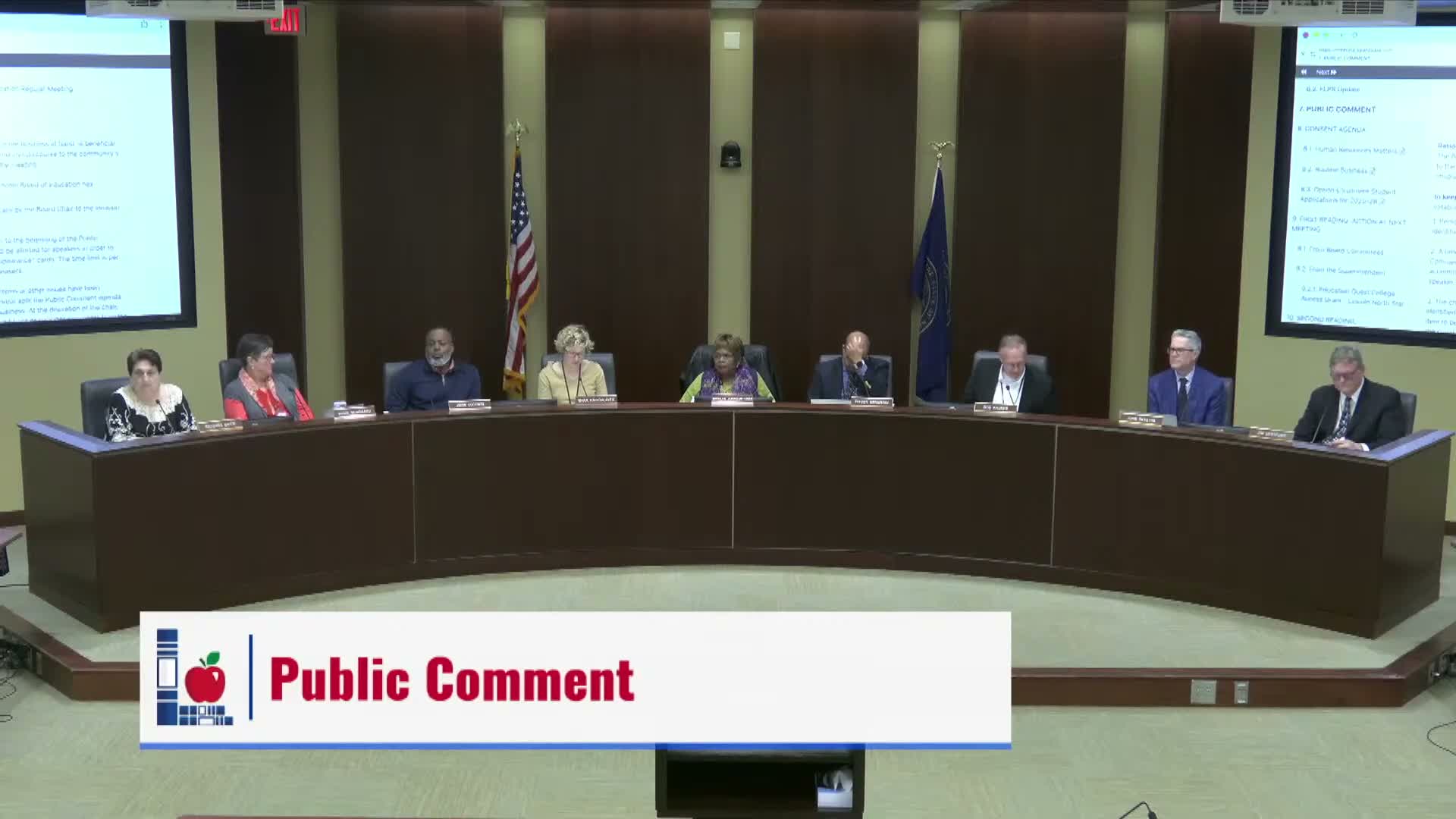
Summary
Students and a Northwest High teacher told the Lincoln Public Schools board they fear large transparent "garage" classroom doors leave rooms vulnerable during violent emergencies and urged the district to replace them with solid walls or reinforce them; the board heard the comments during public comment and did not take immediate action.
Haley Falk, a student at Lincoln Northwest High School, told the Lincoln Public Schools board that more than 80 students signed a petition asking the district to replace large transparent garage‑style classroom doors because they provide minimal physical resistance during violent emergencies.
“We are here for a single urgent reason, student safety,” Falk said, arguing that the doors allow full visibility into classrooms while offering little protection and that current lockdown procedures asking occupants to evacuate to another room or exit are impractical in densely populated hallways. She cited national data, saying that between 2004 and 2024 the number of U.S. students exposed to school shootings nearly tripled and that injuries and deaths rose by 715 percent.
Anton Ullbrecht, a teacher at Northwest, told the board he supports students’ concerns and described operational and safety problems with the doors: they reduce attention, become unusable when teachers attach paper and materials, and cannot be secured when rolled up. Ullbrecht said the prescribed evacuation route could require students to walk roughly 1.5 miles across I‑80 to the designated rendezvous point and said replacing the doors with standard walls would provide a secure location for staff and students and improve focus and peace of mind.
Other public commenters at the meeting included a student who asked that participation in high school sports be considered for physical education credit; that request was recorded by the board separately during public comment.
Board members did not take immediate action on the requests. The comments were delivered during the public comment period; the board moved on to the consent agenda and other business and later voted to enter closed session for negotiations and legal advice. No formal report, study directive, or vote on facility changes was recorded during the public meeting.
The petitioners’ requests raise questions the board may address in later agenda items or facility planning sessions, including cost estimates, the timeline to retrofit or replace classroom doors, and whether temporary reinforcements are possible while longer‑term construction is planned.