Get Full Government Meeting Transcripts, Videos, & Alerts Forever!
Get email alerts on the Education.special Education topic
No spam. Unsubscribe anytime.
Special education director Jennifer Pecoraro outlines enrollment, funding and new self-contained classroom for OAKES 41
Summary
Jennifer Pecoraro, the unit's special education director, told the OAKES 41 school board on Sept. 16 that the five-district special-education unit served 255 students last year (OAKES: 46), that excess costs have declined this year, and that a new self-contained classroom opened at the unit office to reduce costly out-of-district placements.
Jennifer Pecoraro, the special education director for the five-district unit that includes OAKES 41, reviewed program enrollment, funding and new supports at the Oakes School Board meeting on Sept. 16.
Pecoraro said the unit served 255 students last year and that OAKES had 46 special-education students in that count; child counts for the current year will be finalized after Dec. 1. She described the 13 eligibility categories for services for ages 3–21 and noted that one category’s name recently changed in state legislation from “emotional disturbance” to “emotional disability.”
The director summarized funding sources as federal special-education grant funds (referred to in the transcript as “IDAB”), discretionary teacher-retention grants when available (about $10,000 in the year referenced) and behavioral-health grants. She said district contributions to excess costs have historically risen but that this year the unit’s excess costs have declined. “This is the first year… I’ve never seen excess costs go down,” Pecoraro said, while cautioning the reduction could reverse depending on student movement and individual needs.
Pecoraro emphasized the district’s use of MTSS (multi-tiered system of supports) before referral to special education. “If a student is struggling, you would meet with your MTSS team… and put them in an intervention,” she said, adding that interventions should be tried and documented before evaluating a student for a disability.
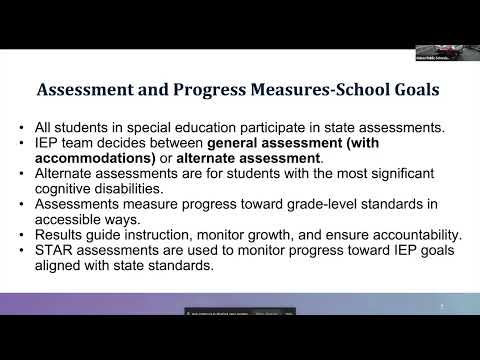
She also described federal obligations to educate students in the least restrictive environment and explained that nearly all students with IEPs are assessed to the same standards as their peers, with only a very small number taking alternate assessments because of significant cognitive impairments.
Highlighting academic goals, Pecoraro said OAKES’ special-education scores met state targets for reading and graduation rates last year but flagged math as a statewide area of concern that will likely receive more attention in the next one to two years. “Math is something everyone is struggling with,” she said, describing a statewide shift in focus toward math instruction.
A substantive operational change Pecoraro announced was a new self-contained classroom opened at the unit office this fall to serve students with intensive needs locally rather than sending them to distant placements. She said the first student began in that classroom the same week as the board meeting and noted the financial and continuity costs of remote placements (one comparison figure given in the presentation was about $100,000 more per year for a single out-of-district placement).
Pecoraro described a district support team made up of school psychologists and social workers, behavior-plan fidelity checks, and professional development for staff and parents. She invited board members to ask questions and to contact her with case-specific concerns.
The presentation concluded with an assurance that staffing and program allocations have been adjusted to better match student needs; Pecoraro said two para positions were recently filled (including a returning para, Aditi Knoedel) and that a shared speech-language pathologist is in place.