Get Full Government Meeting Transcripts, Videos, & Alerts Forever!
Get email alerts on the STEM Curriculum topic
No spam. Unsubscribe anytime.
Tularosa board hears 'Physics in a Box' presentation; $319,000 Title I purchase recommended
Summary
After a presentation by the program’s creator and a local representative, the Tularosa school board was asked to approve a $319,000 initial purchase of Physics in a Box using Title I funds; presenters said the hands‑on kits and weekly teacher training have been used in more than 100 districts and can start in January.
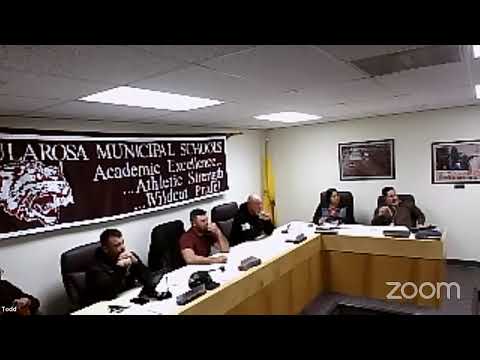
Tularosa school board members on Nov. 19 heard a presentation on Physics in a Box from Dr. Anatoli Ganchenko and Gary Kirk and were asked to approve an initial district purchase of the hands‑on middle‑school physics kits, a cost the presenters and administration said could be covered by Title I funds.
Dr. Anatoli Ganchenko, identified in the meeting as a physics professor at the University of Colorado Colorado Springs, described the curriculum as a set of classroom kits that package about 100 middle‑school physics lessons into modules such as mechanics, optics and electricity. “Physics is classical. It will never get obsolete. We just put the physics in a box,” Dr. Ganchenko said, summarizing the program’s goal of making conceptual physics tactile and repeatable in every classroom.
Gary Kirk, introduced by district staff to present the product locally, emphasized the non‑consumable design and the program’s teacher supports. He and Dr. Ganchenko said the program includes weekly teacher training via Zoom, archived lessons, and teacher handouts that aim to integrate math with science instruction. The presenters cited use in more than 100 districts across 15 states and pointed to Seminole County, Fla., as an example where they said student interest in high‑school physics doubled after classroom adoption.
District staff told the board the initial investment would be roughly $319,000 and that Title I funds were available to cover that portion; the recommendation called for starting with mechanics boxes and phasing in optics, electricity and magnetism modules. Staff said the rollout could begin in January and that additional boxes could be purchased in future years. Board members asked about grade placement, math readiness and replacement parts; presenters said sixth graders can begin mechanics, teacher training and virtual lessons support differentiated pacing, and replacement components are inexpensive.
The transcript does not record a roll‑call vote on the purchase recommendation. A district representative described the purchase as a “big investment” but one that would not come from the general fund. The board also heard routine questions about classroom management, consumables and maintenance; presenters said they had minimal replacement orders at other sites and noted examples where engagement reduced damage to equipment.
What happens next: the board heard the recommendation and discussed timeline and budget sources. The transcript excerpt does not record a formal board vote on the purchase during the portion provided; staff indicated implementation planning could start immediately if the board approves funding.