Get Full Government Meeting Transcripts, Videos, & Alerts Forever!
Get email alerts on the Enrollment topic
No spam. Unsubscribe anytime.
Facilities committee says Dec. 8 work session with OFCC, FMD will be pivotal to pin down school needs as housing growth continues
Summary
Bethel Local facilities committee reviewed a new enrollment-projection study and tied projected student growth to the multi‑phase Carriage Trails development, urging members to bring questions to a Dec. 8 session with OFCC, FMD, Keighler and Shared Service Alliance to clarify timing, housing mix and funding.
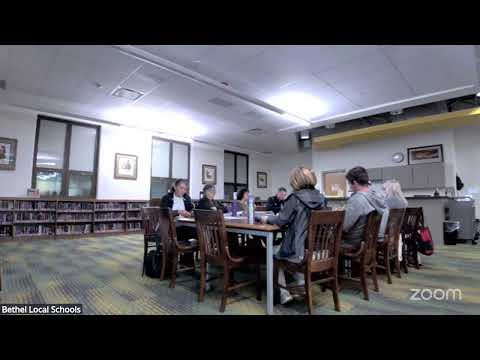
Committee members on the Bethel Local Board of Education facilities committee said a Dec. 8 work session with state and consultant partners will be crucial to reconcile new enrollment projections with planned housing at Carriage Trails and to define near‑term facility needs.
The meeting opened Nov. 5 with Chair (Speaker 2) confirming a Dec. 8, 6 p.m., work session at which the Ohio Facilities Construction Commission (OFCC), educational planner FMD, Keighler and the Shared Service Alliance will present consolidated data and answer questions. "I highly encouraged this group to be there, to try and consolidate everything," Chair (Speaker 2) said, urging members to clear calendars.
Why it matters: committee members argued that previous OFCC estimates underpredicted growth and that the Shared Service Alliance's 10‑year lookback may better reflect the district's recent trajectory. Committee member (Speaker 1) said the district currently counts roughly 2,100 students and that some projections show enrollment rising to about 2,650 by 2031 — an increase of roughly 550 students — contingent on how quickly Carriage Trails phases proceed.
Members debated modeling choices and key assumptions. Several attendees said short‑run anomalies (COVID enrollment dips and refugee inflows in 2021) distort simple year‑to‑year trends, so using a 10‑year historical window and scenario ranges (low/medium/high) would give more robust guidance. One member summarized the tradeoffs: "If shared service alliance used the last 10 years, it's going to be a lot more accurate to the growth rate that we've experienced," Committee member (Speaker 1) said.
Housing mix and phasing remain central unknowns. Committee members noted phase 1 of Carriage Trails produced mainly single‑family homes, while later phases might include townhouses, apartments or senior housing — each mix changes the expected children per household. A member estimated roughly 0.8 students per household in phase 1; others warned that apartments or senior housing would lower that figure. "You need to know how fast they're going to build those, what mix they build, over what time period," Committee member (Speaker 3) said.
Committee members pushed for hard numbers from developers and consultants at the upcoming work session: how many lots and units are planned in each phase, the anticipated mix (single family vs. multi‑family vs. senior), and realistic schedules for sales and closings. Several members noted enrollment can be affected by resales and market conditions; one member said 132 new houses sold in the last year in the area but also flagged many resales currently on the market.
What the committee will do next: members asked for a coordinated agenda for Dec. 8 with specific lines of questioning — the chair suggested collecting questions in a shared document ahead of time. The committee also asked FMD and consultants to map projected student counts to specific school levels to help prioritize renovations, swing space needs and potential new construction funds.
Authorities and data: the committee discussed the role of OFCC (Ohio Facilities Construction Commission) in funding school construction (noting the typical 80/20 funding split referenced in the meeting) and asked FMD to present site‑plan options. Members requested that Shared Service Alliance provide scenario ranges and clarify whether apartment and senior‑housing units were included in the current projections.
Next steps: the Dec. 8 work session will be open to board members as a work session; facilities‑committee members plan to attend as a group to ask targeted questions. The facilities committee also scheduled a regular facilities meeting for Dec. 10 to follow up.
Ending: Committee members agreed the Dec. 8 session will provide a roadmap for near‑term decisions but said questions about housing mix, phase timing and OFCC assumptions must be resolved before the board can fix a funding or construction path.