Get Full Government Meeting Transcripts, Videos, & Alerts Forever!
Get email alerts on the School Finance topic
No spam. Unsubscribe anytime.
Berkshire Local board warned of potential fiscal caution as property-tax reforms cut revenue
Summary
Treasurer and superintendent told the Berkshire Local Board that recent state property-tax reforms could push the district into negative cash by 2028, requiring expenditure reductions, a likely future levy and new revenue programs to avoid classroom cuts.
The Berkshire Local Board of Education heard on Tuesday that state property-tax reform and related legislation could significantly worsen the district's five-year financial outlook, potentially pushing the district into negative cash by 2028 and triggering a formal fiscal-caution process.
Treasurer (staff) presented the February-required forecast and emphasized uncertainty in how the new laws will be calculated. "We believe it's gonna be a little over $1,000,000 for one year and then potentially an additional $3,000,000 through the life of this forecast to 2030," the treasurer said, summarizing preliminary estimates under the reform scenario.
The forecast compares cash balances with and without recent changes to property-tax law. Under one scenario presented, the district's cash balance declines more rapidly with reform and would become negative in 2028, a change the treasurer said would prompt the Ohio Department of Education to issue a 10-day letter requiring the district to submit cuts and levy plans.
Superintendent John (first-name given in the meeting) told the board that if fiscal caution is declared the district will be required to produce formal reduction plans. "That will mean we'll have to put out a plan, but we will have to have some level of expenditure reductions," he said, adding the administration's priority is to make cuts "as far away from the classroom as possible."
Board members pressed on next steps and possible revenue options. The superintendent outlined a mix of actions the district is considering: targeted expenditure reductions, an eventual levy campaign once the district has precise calculations (the board decided not to run a levy in May because of the uncertainty), and expansion of revenue-generating programs. He cited preschool tuition, seats sold in workforce-development pathways, vocational-program seats, business partnerships and potential court-placed alternative programs as revenue options.
The treasurer said the district will update the forecast in May after state calculations become clearer and reiterated that the district currently projects only seven days of cash at the end of 2027 under the current assumptions. "So it's imperative that we make any adjustments at the end of this school year/beginning of next," the treasurer said.
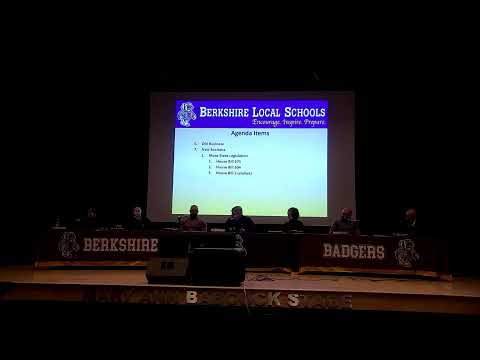
Board members also discussed state legislation that could affect revenue and operations beyond the property-tax reforms. The superintendent flagged multiple bills by number and described how they could affect school funding and local budgeting, and members noted that some bills remain uncertain in timing and calculation.
The board did not vote on budget cuts during the meeting. The administration will return with updated forecasts and specific corrective plans after the state issues its calculation and the district completes the May forecast.
What happens next: the district will file the February forecast as required, expect a possible 10-day letter from the state, and prepare options that include expenditure reductions, a levy proposal for a later ballot and revenue expansion measures.