Get Full Government Meeting Transcripts, Videos, & Alerts Forever!
Get email alerts on the Budget topic
No spam. Unsubscribe anytime.
Conestoga Valley faces multimillion-dollar gap; administrators offer millage scenarios and budget timeline
Summary
District finance officials said the draft 2025–26 budget projects $91M in revenue and $95M in expenditures, leaving a $4.2M deficit; using 50% of a potential state 'Ready to Learn' supplement and a 3% millage increase could trim the shortfall substantially, administrators said.
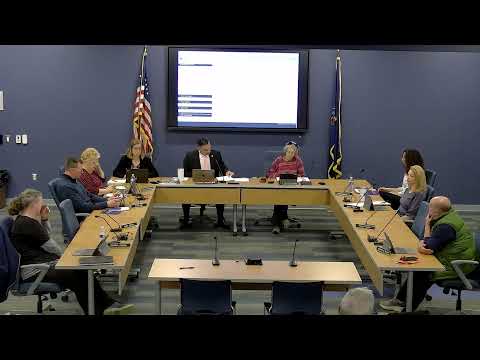
Conestoga Valley School District administrators on April 14 presented a draft 2025–26 budget showing $91,000,000 in expected revenue against $95,000,000 in planned expenditures, producing a projected $4,200,000 deficit.
Mrs. Huntzinger, who led the finance presentation, told the board the district budgeted a $1.0 million deficit for 2024–25 but now expects to close the year nearer $614,000 because real-estate tax collections and higher realty‑transfer receipts exceeded earlier estimates. She warned several revenue items remain uncertain, including how much of an additional $1.4 million in a proposed Ready to Learn adequacy supplement will materialize and whether proposed cyber‑tuition reforms will change tuition costs the district faces.
The administration outlined options to narrow the projected 2025–26 gap: including only 50% of the Ready to Learn adequacy supplement in projections and pursuing a millage increase. "If we were to go with the 3% increase and 50% of that Ready to Learn adequacy supplement, it would decrease our deficit to about $1,300,000," Huntzinger said. She also presented scenarios for a 3.5% millage increase and offered to provide more detailed breakdowns at the next meeting.
Huntzinger noted special‑education costs are an ongoing pressure, with the district’s special‑ed expenditures rising faster than corresponding subsidy growth. She showed the district’s special‑education funding gap and said the state subsidy formula is complex and not keeping pace with service costs.
Board members asked detailed questions during a Q&A about assessment appeals and how ongoing and planned large construction projects — including Rockvale and a warehouse near Ben Franklin Boulevard — would affect future tax rolls. The administration said some new construction would likely not hit the district’s tax rolls until fiscal years 2026–27, and that the assessment office, not the district, typically revalues property; appeals can be filed in specific circumstances.
The board was reminded of statutory budget deadlines: the district must adopt a proposed budget by May 12 (to allow the required 30‑day public display before final adoption) and may make changes through June before adopting the final budget on June 16. Mrs. Huntzinger said she would return the following week with millage‑impact scenarios requested by several board members.
The board did not take a final vote on the 2025–26 budget during the work session; the administration is scheduled to place a proposed budget on the May agenda.