Get Full Government Meeting Transcripts, Videos, & Alerts Forever!
Get email alerts on the Board Actions topic
No spam. Unsubscribe anytime.
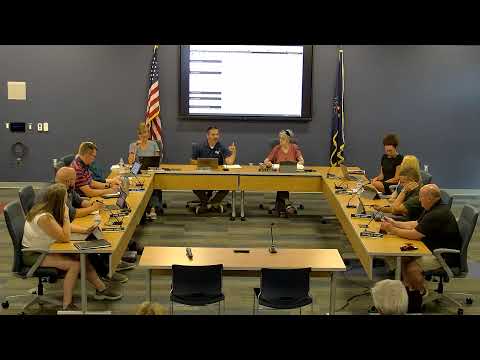
Conestoga Valley board approves superintendent pay adjustment, vendor contracts and specialized transportation
Summary
At its July 21 work session the Conestoga Valley Board of School Directors approved a superintendent compensation adjustment and a set of vendor and service agreements — including a pre‑K dental screening contract, supplemental transportation services for students with special needs, and adoption of an applicant‑tracking tool — all by unanimous votes.
The Conestoga Valley Board of School Directors approved several personnel and contract items at its July 21 work session, including a compensation adjustment for the superintendent and multiple supplementary vendor agreements funded through existing grants or budget lines.
The board voted unanimously to adopt consent agenda items a–k, then later approved a motion to adjust the superintendent’s 2026 compensation following a separate roll call. The meeting record shows unanimous roll‑call outcomes on the major actions considered during the public session.
Dr. Kosir, presenting an agreement for the district’s Pre‑K Counts program, said the district would contract with Union Community Care to provide dental screenings for Pre‑K students at a budgeted rate of $125 per student and that the screenings would be covered by the Pre‑K Counts grant: “There is no charge to the general fund,” she said. The district will attempt to bill parental insurance first and use the provider as a last resort for meeting the grant screening requirement.
The board also approved supplemental transportation agreements intended to serve students with mobility or complex needs. A presenter described Blue Cap Transportation as a local contractor that supplies specially equipped vehicles and drivers trained to support students with disabilities; the district chose a per‑day contracting option rather than purchasing vehicles to retain flexibility and reduce upfront costs. Board members noted the option to share services with neighboring districts to lower per‑district expenses.
On human‑resources technology, a board member recommended Red Rover as an applicant‑tracking system and video‑recruiting tool, citing its lower annual cost (about $10,000) compared with Frontline (about $23,000) and integrated applicant‑tracking and notification features. Dr. Hartman said the district’s review team was “excited about it” after demos and recommended moving forward with a cost‑effective product that centralizes hiring and onboarding.
Board members also discussed recent state and federal funding uncertainty. One board member summarized the status: the district’s Title I application was accepted (approximately $1,300,000), while Title II/III/IV funds — totaling about $330,000, of which roughly $81,000 supports nonpublic schools — were temporarily unavailable in the PDE application portal pending further state and federal review.
The public session concluded with the board moving into an executive session to review a staff policy waiver request. No substantive public‑comment items were recorded during the open public‑comment portion of the meeting.
Votes at a glance: consent agenda items a–k — approved (unanimous roll call); superintendent compensation adjustment — approved (unanimous roll call); supplemental agreements including Blue Cap Transportation — approved (unanimous roll call).