Get Full Government Meeting Transcripts, Videos, & Alerts Forever!
Get email alerts on the Campus Center Design topic
No spam. Unsubscribe anytime.
JLG pitches "interior city" vision to State Designer Selection Board for Saint Paul campus center
Summary
JLG Architects told the State Designer Selection Board its Saint Paul campus center should be an "interior city"—a flexible, daylighted hub to draw students and the public—while noting SB 2030 energy targets present substantial technical challenges and that the first 120 days of work will be critical to set direction.
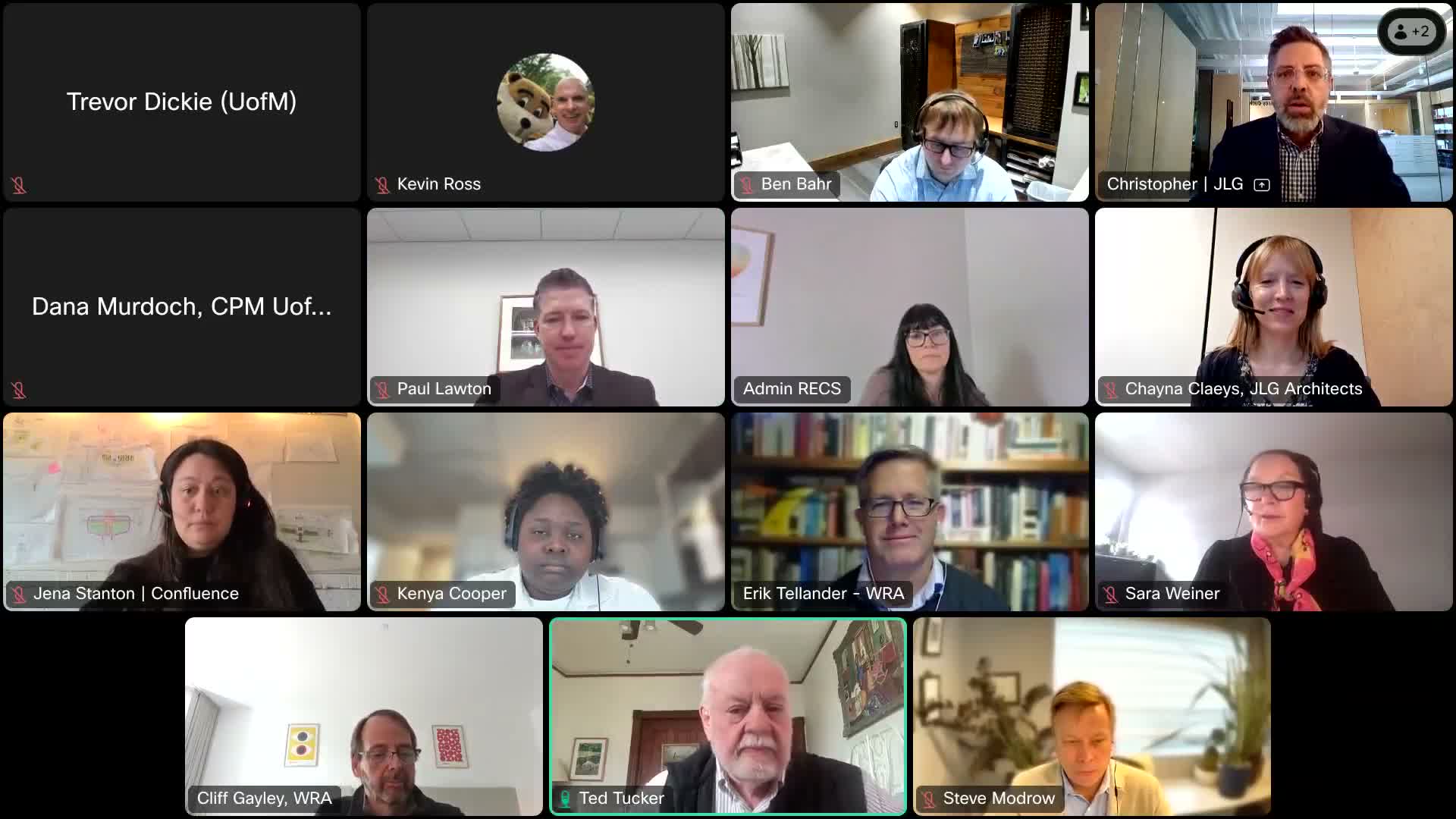
Christopher Kleingartner, principal in charge with JLG Architects, pitched an "interior city" approach for the proposed Saint Paul campus center during a presentation to the State Designer Selection Board, saying the project should shift from a pragmatic replacement to a civic opportunity that "draws both students and the public in." He asked the board to evaluate teams on three priorities: experience building campus community, passion for student life and the ability to balance vision with pragmatic execution.
The JLG team presented a matrixed work plan and emphasized the importance of the first 120 days to set performance standards and avoid late surprises. "So how we start will define success," Kleingartner said, adding the firm intends to use concurrent streams of work—programming, concept and cost—so that decisions about performance and budget inform each other throughout design.
The team described program priorities that include flexible meeting spaces, maker and wellness spaces, integrated casual food, and areas that can convert from daily seating to large campus events. The presenters argued the building should be "rooted in this campus, in its land, in its culture, and open to the future of student life," and proposed design moves to increase daylight and blur the boundary between landscape and interior.
Panel members pressed the team on technical performance and schedule. University architect Paul Lawton asked whether the team had projects that achieved the 90% energy-use reduction tied to SB 2030. In response, the team's sustainability lead said the 90% target remains extraordinarily difficult to meet and that the group has pipeline projects and modeling tools to explore compliance and alternative paths. "I don't think there's actually been a project that's complied with the 90% reduction yet," the team representative said.
Board and agency members also focused on site circulation and accessibility, asking how the team would treat an existing campus tunnel system. The presenters described options that include maintaining lower-grade circulation or bringing circulation to upper levels and driving pedestrian flows through the new building, while noting careful elevation transitions, ramps and elevators would be required to preserve equitable access.
On student engagement, JLG described hands-on outreach strategies—physical models, multi-day stakeholder workshops and distributed model kits for student groups—to build trust with a student population that turns over frequently. The team said it would build decisions around early modeling and regular campus presence to reconcile cost, technical constraints and program priorities.
The board did not take a formal vote; Kleingartner said the decision now facing the board "isn't about selecting a design team" as a narrow procurement choice, but about choosing a team that can help the university tell the story of a new campus destination. The board paused to conduct a second interview; the executive secretary will inform JLG of the board's decision after that session.