Minnesota board directs rulemaking for single PK–12 music license amid teacher concerns
Loading...
Summary
The Professional Educator Licensing and Standards Board voted Feb. 20 to direct rulemaking for a single PK–12 music license with specializations embedded in standards, following advisory-group support and debate over endorsements, administrative assignment risks and implementation details.
The Professional Educator Licensing and Standards Board voted Feb. 20 to direct its rulemaking attorney to pursue a single pre‑K through 12 music license, replacing the current K–12 vocal/classroom and K–12 instrumental licenses and embedding specializations in academic standards. The motion passed by roll call after deliberations and public comment.
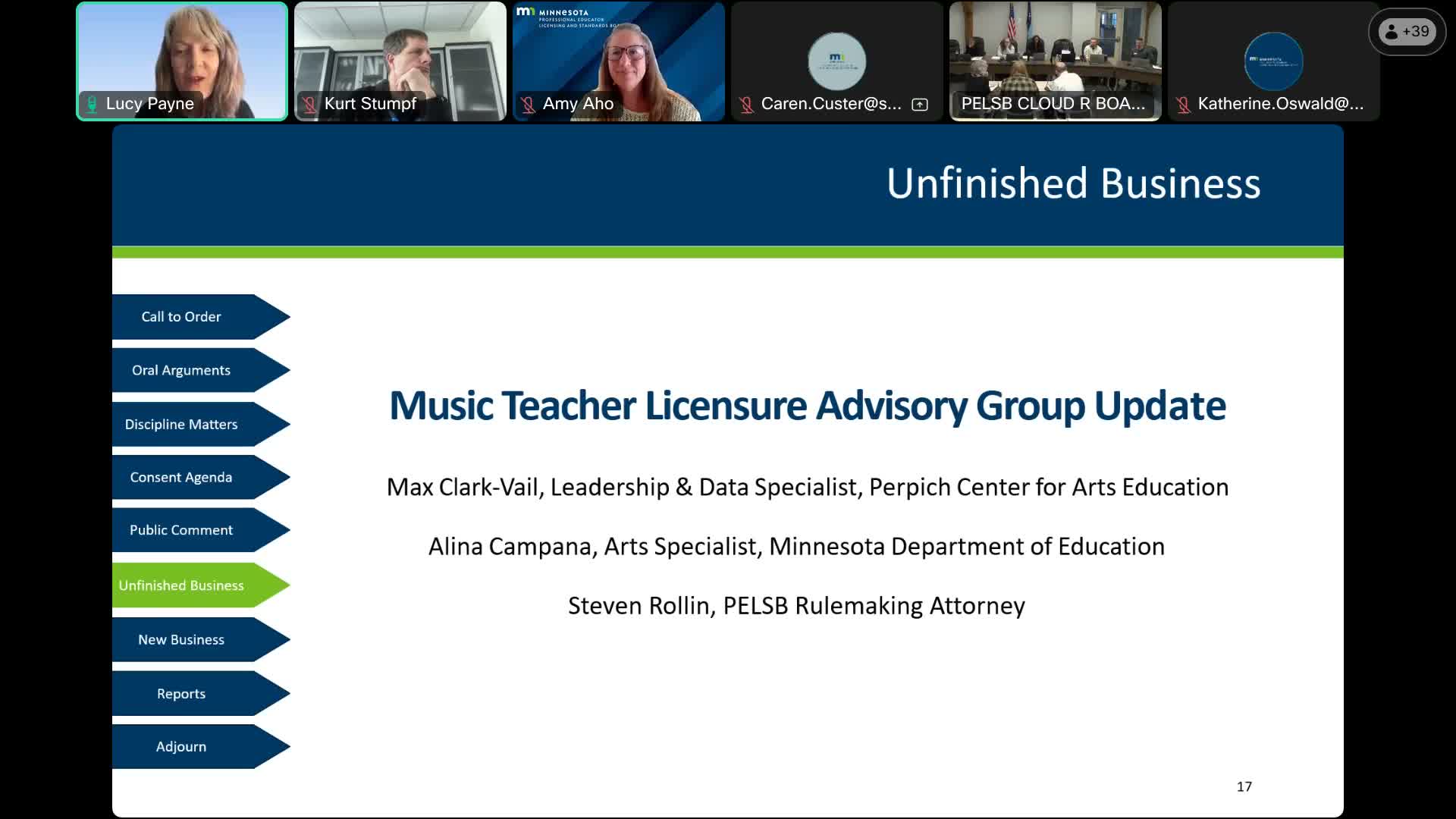
The board’s action followed a multi‑month review by an arts steering committee and a music licensure advisory group, which the presenters said overwhelmingly recommended the single‑license approach. "Option 1" was described to the board as a way to broaden pathways into music teaching, reduce barriers for non‑traditional candidates, and align the state with other jurisdictions that use single licenses effectively.
Several music educators urged caution about implementation. A music teacher who participated on the advisory panel, identified in the record as Mr. Hussaf, said he felt the advisory group's meetings were too brief to capture teachers’ views and raised conditions on supporting changes. "If we're only providing those endorsements to band and choir people, then we're kind of limiting that," he told the board, urging the inclusion of general music, digital music, production and songwriting as recognized specializations.
Board members questioned how endorsements or embedded specializations would be structured and whether higher‑education programs would be able to offer endorsement pathways without additional funding. Presenters used existing visual‑arts standards as an example of how specializations could be embedded and said writing work groups would develop details in rulemaking.
The motion to direct rulemaking passed in a roll‑call vote after limited discussion. Acting Chair Brandy Shoemaker was the only member on record to vote no; Ms. Aho (Ajo) also voted no, and one member (Ms. Dyer) had left the call prior to the vote. The board instructed staff to return draft rule language for board review and public notice as required by the rulemaking calendar.
What happens next: The board’s direction begins the formal rulemaking process; any specific requirements (endorsement lists, coursework, timelines for teacher‑preparation programs) will be addressed in the drafting and public‑comment phases.