Get Full Government Meeting Transcripts, Videos, & Alerts Forever!
Get email alerts on the Rulemaking topic
No spam. Unsubscribe anytime.
PELSB advances combined R4-863 rulemaking but removes proposed K–6 ethnic studies and computer‑science endorsements
Summary
The board moved R4-863 forward to a second comment round but agreed to omit the K–6 ethnic studies and computer science endorsements from this rulemaking package, citing alignment with the newly adopted guiding philosophy and resource concerns.
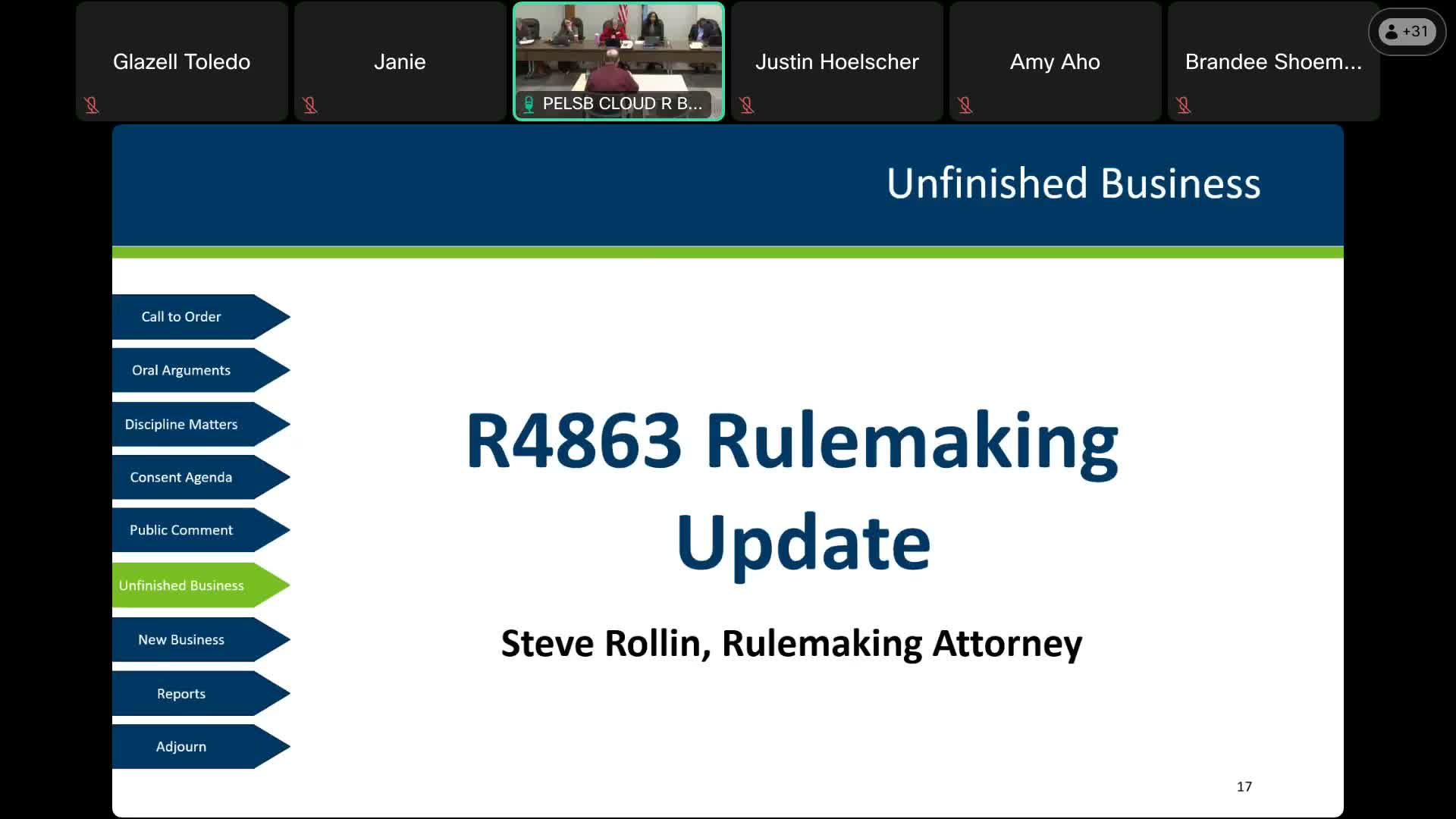
The Professional Educator Licensing and Standards Board heard a rulemaking update on R4-863 at its Dec. 12 meeting and voted to advance the package while excising two proposed K–6 endorsements.
Rulemaking attorney Steve Rolling reviewed the combined proposal, which implements legislative mandates across early childhood education, ethnic studies and computer science licensure and includes technical clarifications (definitions of meaningful progress, portfolio pathways and a bachelor‑of‑arts exemption for visual and performing arts). Rolling noted the professional‑development language was removed from the proposed computer science subject‑matter standards.
Board members discussed whether to include K–6 endorsements for ethnic studies and computer science now or defer them. Supporters said endorsements could help districts identify teachers with additional depth of knowledge; opponents cited limited staff and taxpayer resources and argued that depth of knowledge can be documented through professional development or other means. The board voted to move the rulemaking forward but not to include the K–6 ethnic studies and computer science endorsements in this iteration of R4‑863.
Staff said a second notice-and-comment round and likely a Court of Administrative Hearings hearing will follow; the board will review any substantive changes once public comment is received.