Get Full Government Meeting Transcripts, Videos, & Alerts Forever!
Get email alerts on the School Closures And Budget topic
No spam. Unsubscribe anytime.
Parents and advocates urge Pittsburgh school board to drop closures, use charter-reform funds and increase budget transparency
Summary
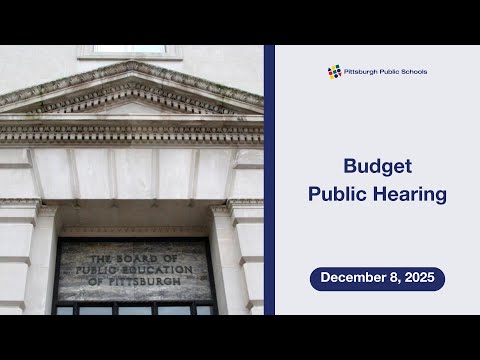
At a Dec. 8 public budget hearing, parents and advocates urged the Pittsburgh Public School District board to abandon proposed school closures, direct $12 million in charter-reform funds to classroom needs and special education, and provide clearer, itemized budget information before any vote.
PITTSBURGH — Parents, special‑education advocates and community members told the Pittsburgh Public School District board on Dec. 8 that proposed school closures would harm students and that newly available state charter‑reform dollars and other budget changes should be used instead to preserve classrooms.
Laura Gallagher, an ally of the Education Rights Network, cited what she said was a $12,000,000 boost from state cyber‑charter reforms and argued the district is not facing the kind of fiscal emergency that would justify displacing students. "Do not close our schools," Gallagher said, adding that she found a prior 6–3 board vote against closures encouraging.
Emily Sawyer, a parent of four Pittsburgh SD students, told the board, "We know it's not a choice between closing schools or raising taxes," and criticized the continued use of tax abatements for developers while residents shoulder rising property taxes. Several speakers said the board should prioritize residents and families rather than concessions to developers.
Paulette Foster, speaking for the Education Rights Network, urged the board to allocate charter‑reform funds and other savings to special‑education services. "Students with disabilities are invisible in the budget," Foster said, and asked the board to make special‑education needs an explicit budget priority rather than a separate, underfunded line item.
Speakers pressed the board for greater transparency and comparability in budget proposals. Valerie Webb Olman disputed the claim that rejecting a prior closure plan shifted the tax burden and asked the board to demand "apples‑to‑apples" comparisons from administration before any vote. Olman also noted enrollment declines in past decades and argued that closures have not historically produced the expected savings.
Several parents and advocates recommended alternative steps the board and administration could take: Mike Cummins suggested procurement reforms that he estimated could save $10–16 million a year and proposed leasing the Bellfield administration building and moving offices into underused schools to retain families; Mark Rodicus urged any changes be taken in smaller, separate votes so the board can consider each school or grade cluster independently; Lily Oman urged an audit to document how much previous closures have actually cost the district, saying past rounds exceeded $70 million in total costs.
Speakers also raised concrete budget figures from the record: commenters said the district received roughly $12,000,000 from state cyber‑charter reform, listed roughly $6,800,000 in central‑office vacancies in the proposed budget, and warned that proposals could displace "about 6,000 students." One speaker urged passage of a millage increase, noting it would raise roughly $41 a year for a home with a $100,000 taxable assessed value.
Board President Jeanne Walker closed the hearing by thanking participants and reminding the public that the board will reconvene the next night for a progress monitoring report on third‑grade reading. No formal board action or vote on the budget or closures occurred during the hearing; the testimony portion concluded and the meeting was adjourned.
What happens next: speakers repeatedly asked the board to demand clearer, itemized budget comparisons from district administration and to consider using charter‑reform dollars and procurement savings before pursuing closures. The board scheduled a progress monitoring report the following evening; any formal votes on budget items or closure proposals were not taken at this meeting.