Lifetime Citizen Portal Access — AI Briefings, Alerts & Unlimited Follows
Parents and community groups press Pittsburgh Public Schools to adopt bell‑to‑bell phone ban
Loading...
Summary
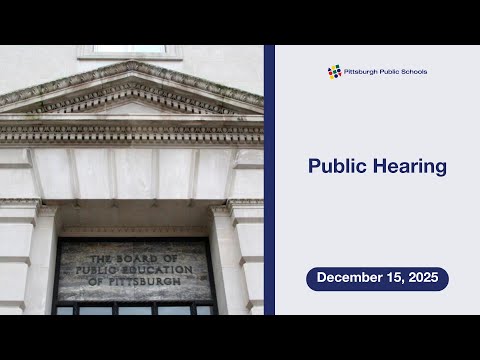
At a Dec. 15 public hearing, parents, teachers and community advocates urged the board to adopt Policy 02/16 to ban personal cell phones during the school day, citing research on distraction and mental‑health harms and asking that exceptions be narrow and clearly defined.
Dozens of parents, educators and community advocates urged the Pittsburgh Public Schools board on Monday to adopt a districtwide bell‑to‑bell ban on personal cell phones, saying the devices disrupt learning, widen inequities and contribute to student mental‑health problems.
"Smartphones in learning disrupts focus, disrupts creativity, it disrupts direct connection and communication, and likely has serious mental health impacts on students. Period," said Sarah Fishbein, a parent who opened the public comment period.
Speakers repeatedly asked the board to adopt the proposed policy (02/16) with edits recommended by Pittsburgh Public Unplugged and to narrow exceptions to documented medical needs, IEPs and 504 plans. Judith Adelson, a parent and PTO volunteer, said she supports the district policy and the edits submitted by advocacy groups.
"I strongly support the proposed ban in policy 2 16 and urge you to adopt the PUP recommended edits," Adelson said, adding that several districts and a pending state bill favor bell‑to‑bell bans.
Gordon Mitchell, introduced by the moderator, urged the board to align local language with the Pennsylvania Senate measure that would limit exceptions to medical needs documented by a provider and to remove vague instructional or safety carve‑outs that could place enforcement burdens on teachers.
Not everyone spoke in absolute terms: Emily Sawyer, a substitute teacher and parent, said a ban should be combined with instruction on digital literacy and accountability for administrators who implement the rule. "I think a cell phone ban is a band aid," she said, urging the district to teach students how to use technology responsibly rather than rely on bans alone.
Commenters also raised operational questions the board will need to answer before implementation: how phones will be stored and returned at day's end, who enforces exceptions, and how the district will handle communication needs for families. "What will happen to the cell phones when inevitably they are at school? How will students get them back at the end of the day?" parent Carrie Thompson asked.
Speakers cited emerging research and local results from districts that moved to phone‑free days, saying disciplinary incidents and unexcused absences have fallen and grades improved in some cases. Several commenters referenced recent legislative activity in Harrisburg: speakers said a Senate education committee advanced a bipartisan bill (referred by commenters as Senate Bill 1014) that would require bell‑to‑bell bans by the 2027–28 school year.
The public hearing recorded comments but included no formal board vote on Policy 02/16. The board will consider public input and continue its review; a special public hearing on a separate charter school application is scheduled for the next day at 5:30 p.m.
Implementation details — who enforces the rule, how exceptions will be documented, and how phones are stored and returned — were raised repeatedly by speakers as prerequisites to adoption, and several asked the board to adopt a consistent districtwide standard rather than a patchwork of building‑level rules.