Get Full Government Meeting Transcripts, Videos, & Alerts Forever!
Get email alerts on the Facilities And Capital topic
No spam. Unsubscribe anytime.
District outlines $76.8M–$89.2M campus consolidation option; financial advisers to present funding scenarios in February
Summary
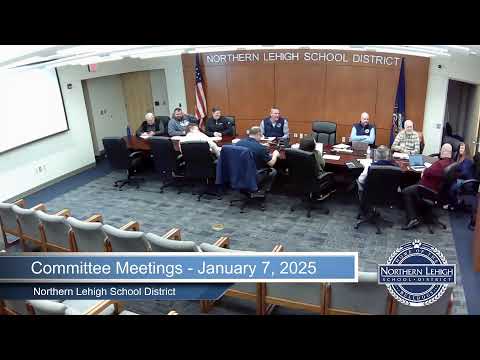
Northern Lehigh administrators presented itemized feasibility estimates for building repairs, additions and a possible common‑campus consolidation, with probable costs ranging from $76.8 million to $89.2 million; the administration will bring funding options from financial advisors to February’s finance committee meeting.
Northern Lehigh School District administrators told the education committee that a full consolidation and infrastructure upgrade across district buildings would be a multiyear, multimillion‑dollar undertaking, with architects’ and engineers’ estimates putting a probable cost range at $76.8 million to $89.2 million.
Administrators said the figures — presented as a range because of material and labor cost uncertainty — cover both targeted infrastructure fixes and larger additions, such as middle‑school and elementary expansions. The district stressed that it was answering a board request for totals, not making a formal recommendation to pursue full consolidation now.
The district’s analysis broke costs down by building and by work category (envelope, mechanical, electrical, accessibility and site work). Administration also walked the committee through example addition options for Slatington Elementary and the middle school and described a scenario in which Peters Elementary staff and students would move to a larger campus. Officials noted the campus plan would require sequencing and that the middle‑school project would likely have to precede other moves.
Administration said it has engaged financial advisers at PFM to evaluate funding paths and to present options to the finance committee in February, including bond scenarios and phased approaches. The board asked the administration to provide clearer cost-to‑phasing models so the finance advisers can prepare realistic funding packages.
Board members also pressed the administration on operational impacts. Transportation modeling run as part of the feasibility work showed lower total miles driven and fewer daily bus stops in a consolidated model (a projected reduction of about 314 miles per day and roughly 242 fewer stops), but it would require adding four buses and produce a mixed effect on monthly bus/van costs. Administration said fuel savings would largely offset the additional bus/driver cost on an annual basis but that net impacts depend on final routing and timing decisions.
Committee members raised labor and procurement questions about whether in‑house vocational programs or LCTI students could perform any project work. Administrators said they would investigate labor constraints, union rules and viability and report back to the board. The committee also discussed site logistics (parking, pick‑up/drop‑off patterns, and bus loops) and ADA/code triggers: administrators noted that substantial renovation can trigger code upgrades (for example, fire‑alarm voice notifications and ADA door/handrail fixes) that add to project scopes.
Next steps: administration will try to schedule the architects to present pricing and scope options at the upcoming board meeting if feasible; otherwise the architects will return for the finance committee meeting in February at which PFM will present funding options.