Get Full Government Meeting Transcripts, Videos, & Alerts Forever!
Get email alerts on the Capital Financing topic
No spam. Unsubscribe anytime.
Advisers outline phased borrowing plan that could fund $50M in Northern Lehigh school projects
Summary
Financial advisers presented a multi‑stage municipal bond plan to phase in borrowing over several years, showing examples of $15M tranches and a projected $500,000 annual budget phase‑in; board members asked about tax impacts, use of fund balance and next steps including architect scoping and a dedicated forum for community input.
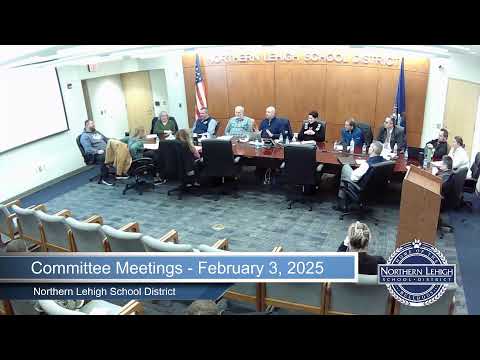
Financial advisers on Tuesday gave Northern Lehigh School District officials a detailed look at how the district could finance a large “common campus” project by phasing borrowing over several years.
Brad Remming of PMM Ali and a Raymond James underwriter walked the board through municipal‑bond concepts, tax‑exempt financing rules, and sample repayment schedules showing how three or more $15 million issuances could be structured to keep year‑to‑year budget impact smoother than borrowing all at once. The advisers presented an illustration that assumed 25‑year amortizations and a wrap‑around structure intended to limit spikes in annual debt service.
“Think of it like a 25‑year mortgage,” Remming told the committee, adding that small‑issuer and bank‑qualified rules can change the market treatment and the effective rate. The advisers said the district presently looks like a favorable borrower because of its cash balances and planning work: “I would think you'd be very well received in the market,” one adviser said.
Why it matters: The presentation translated high‑level feasibility work into concrete budget considerations. Under the advisers’ example, the district’s debt service could rise from roughly $2 million a year toward about $4.5 million at the peak of the phase‑in — a change that the team said would require the board to find roughly $500,000 a year in recurring budget room during the first multi‑year phase.
Board concerns and context: Members discussed several ways to cover that increase, including modest tax‑rate adjustments, planned use of fund balance, or operational efficiencies and building consolidations. A board member noted the district added about $2 million to fund balance last year and suggested that careful timing could reduce the need for immediate tax hikes. Administrators also noted the district still receives limited PlanCon reimbursement for legacy projects, which in the advisers’ example reduced net debt service modestly.
Next steps: District leaders asked the advisers to run additional scenarios and stressed the need for detailed project scoping from architects. Administrators proposed scheduling a dedicated forum with the architects and financial advisers so the board and the public can see phased options — what an initial $15 million tranche would buy versus later tranches — before the budget cycle finalizes decisions for 2025–26.
What the board directed: No vote was taken. The board asked administration to continue working with the planners and to bring more granular scenarios to the March Buildings & Grounds Committee meeting. The district also signaled it will expand public outreach — including surveys and a proposed community night — to gather resident input before any borrowing decision.
Provenance: The advisers’ presentation and board discussion appear repeatedly in the committee record beginning with the financial adviser introduction (SEG 1027) through the mass Q&A and next‑steps discussion (SEG 1900).