Get Full Government Meeting Transcripts, Videos, & Alerts Forever!
Get email alerts on the Transportation topic
No spam. Unsubscribe anytime.
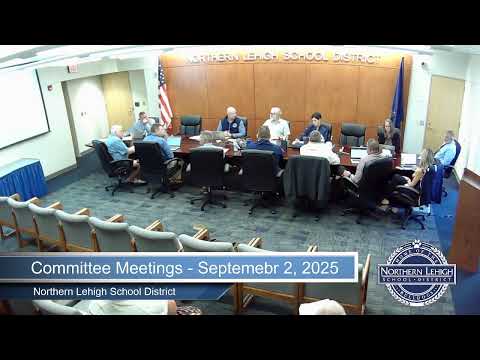
Northern Lehigh committee weighs buses, crossing guards and other options to protect students who walk
Summary
Committee members heard administration report parent safety concerns for middle‑ and high‑school walkers, reviewed three options (add buses, reintroduce crossing guards, or keep current practice), and asked staff to return with modeled costs and route impacts.
The Northern Lehigh School District’s committee discussed safety concerns for secondary‑school students who walk two miles or less and directed administration to further research options including additional buses, reintroducing crossing guards, or maintaining the current policy.
Director (committee presenter) said the complaints have come mainly from middle‑school parents who worry about children walking in the dark and crossing train tracks and canal bridges, and reported that he’s received “no more than 5 or 6” direct contacts about the issue. “Some of the concerns ... focus around what the family, the guardians are perceiving as a safety issue,” he said.
Administration outlined three choices for the committee to consider: 1) change routing or add 1–4 buses (administration estimated about $60,000 per bus per year in operating cost), which would require reworking routes and could create a domino effect that delays later runs; 2) reintroduce 3–5 crossing guards at key intersections (the national hourly average cited was about $18 per hour; this option may be less costly than multiple buses but still has an ongoing expense); or 3) keep status quo and monitor.
Transportation coordinator Mr. Wanamaker told the committee that producing accurate bus counts would require re‑routing and about two weeks of modeling work: “We have the ability to do that. It would just be it would take a couple weeks. But then we would find out the actual amount of buses it would take,” he said, noting the current preliminary estimate is 1–4 additional buses but could be higher once routes are redrawn.
Board members pressed administrators on likely take‑up rates for additional stops and the potential for buses to run mostly empty. One member said the crossing‑guard option “does not solve the problem of walking up Center Street in the dark,” pointing to long stretches without sidewalks. Another noted the tradeoffs in equity and operational complexity of adding stops for only some secondary‑grade students.
Administration flagged operational constraints: adding stops or routes could push arrival/departure targets later (the district targets roughly a 3:30 p.m. completion at Peters) and require additional driver time. The committee asked staff to map costs and run models for a follow‑up recommendation to be presented to the full board.
Next steps: administration will model route changes and cost scenarios and return to the committee with estimates and recommended options; no formal vote was taken at the committee meeting.