Get Full Government Meeting Transcripts, Videos, & Alerts Forever!
Get email alerts on the Program Of Studies topic
No spam. Unsubscribe anytime.
District previews expanded assessment use and major changes to high‑school program of studies
Summary
Administrators described pilots of Firefly, iReady and IXL diagnostics and previewed a proposed high‑school program of studies shift toward career pathways, more half‑credit electives and a recommended return of a full‑time business/integrated‑technology instructor; board members pressed on math remediation and scheduling implications.
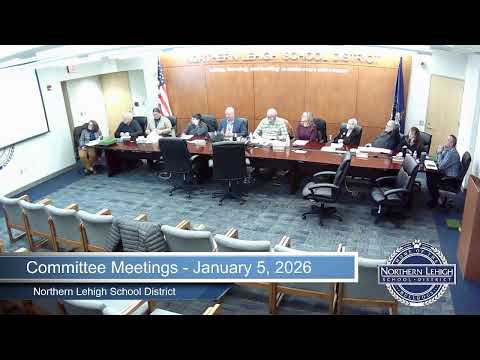
Administrators told the education committee on Jan. 6 that Northern Lehigh schools will run Keystone and WIDA assessments in January and early February, and that teachers are piloting several local diagnostic tools to give more actionable information to students and families.
Amanda Bariana, the district’s technology integration specialist and data team lead, described pilot results and teacher use of Firefly, iReady and IXL to identify student needs and plan targeted instruction. Bariana said Firefly provides a Keystone‑prediction score that teachers can use in student conferences: “There’s a 72 percent chance that the student will score proficient,” she said while illustrating how the data guide individual action plans.
District leaders also previewed an overhaul of the high school program of studies intended to reduce rigid credit requirements and align course sequences with seven career pathways — including STEM, health sciences, arts and humanities, multimedia and communications, education, entrepreneurship/business and CTE. The proposed approach would front‑load an integrated technology and AI for research sequence in ninth grade and move many electives to half‑credit modules so students can sample more options without sacrificing graduation requirements.
Administrators said the redesign aims to keep total credits intact while creating flexible pathways: instead of fixed four‑credit requirements in math or social studies, each student would be required to take at least three credits in math, science or social studies and one additional credit in one of those areas determined by counseling and pathway planning. The plan would also restore a full‑time business educator to provide integrated technology, financial literacy, and entrepreneurial offerings that administrators say are currently constrained by staffing.
Board members raised questions about math achievement and remediation: several members warned that reducing a required fourth math credit could decrease instructional time for students who need extended math support. Administrators replied that Algebra I proficiency is typically assessed by sophomore year and that scheduling and counseling would preserve opportunities for students who need extra math instruction.
Why this matters: The program changes would alter course scheduling, staffing (a recommended additional full‑time business/integrated‑technology teacher), and how the district allocates credits, with implications for budgeting and master scheduling for 2026–27. Staff said they will return with a formal program‑of‑studies proposal next month and that the committee’s feedback will inform credit alignment and course sequencing.
What’s next: Administration will produce a formal program‑of‑studies packet and proposals for credit changes for board consideration next month; questions about staffing, scheduling detail by building, and remediation options remain open for further committee work.