Get Full Government Meeting Transcripts, Videos, & Alerts Forever!
Get email alerts on the Education Assessment topic
No spam. Unsubscribe anytime.
Northern Lehigh SD presents 2024'25 assessment results showing mixed gains, strong high-school growth
Summary
District officials presented 2024'25 Future Ready PA data showing notable cohort growth in ELA at lower grades and strong high-school growth, while math achievement and growth lag in several buildings; administrators outlined curriculum pilots and targeted interventions for underperforming groups.
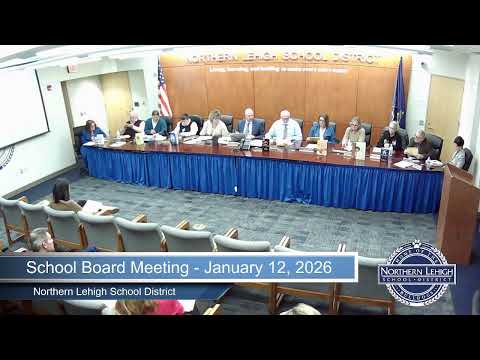
Northern Lehigh School District officials on the board'meeting presented a comprehensive review of 2024'25 assessment and cohort data, highlighting building-level differences and plans to address persistent math gaps.
At the start of the presentation, the district framed the state'level shift to the Future Ready PA dashboard and recent test changes that affected comparability. The presenter explained that science field tests and adjustments to Keystone exams mean some categories report participation only rather than proficiency for this year.
Peters Elementary showed substantial local assessment growth at the primary grades: "From the beginning of the year to the end of the year, there was an increase in students who were at and above benchmark," the Peters presenter said, citing kindergarten growth from 26% to 69% on DIBELS. Peters staff credited a second year of CKLA reading implementation, expanded literacy interventions and added paraprofessional support.
Slatington Elementary posted mixed results. The Slatington presenter reported building proficiency rates below statewide averages (ELA 37.6%, math 35.4%), and noted the building score decline reflected lower ELA and math achievement plus the exclusion of science in this year's calculation. Slatington did report meeting the college-and-career evidence benchmark with a 100% rate.
At the middle school, officials said attendance and ELA growth improved (regular attendance not chronically absent at 85.6%; PBOS ELA growth above the state average), but math proficiency and growth remained areas of concern. The middle-school presenter said administrators are piloting new math curriculum materials and increasing targeted interventions during advisory and intervention periods.
The high school posted the strongest growth measures: the presenter said PBOS literature growth reached the top of the scale and the school recorded its highest building score since the pandemic. Keystone and AP summaries showed mixed proficiency but steady progress: the eleventh-grade cohort scored 54.2% proficient/advanced in literature and 38.3% in math, and AP participation produced a 3.2 average score across exams.
District leaders emphasized next steps: continuing math curriculum pilots (Thinking Math and i-Ready), refining ELA implementation fidelity, expanding MTSS interventions, and targeting historically underperforming groups including economically disadvantaged students, English learners and students with disabilities. The assistant superintendent noted additional ESL staffing and family engagement initiatives to support multilingual learners.
The board held a brief Q&A; administrators said slide decks would be posted online and that further questions could be emailed for follow-up. No formal votes were required on the presentation itself.