Get Full Government Meeting Transcripts, Videos, & Alerts Forever!
Get email alerts on the School Construction topic
No spam. Unsubscribe anytime.
Montoursville Area SD moves to consolidate Loyola Sauk Valley into George C. Leiter; Act 34 hearing outlines $19.7M project and financing plan
Summary
At an Act 34 public hearing, district officials detailed a plan to close Loyola Sauk Valley Elementary and expand George C. Leiter Elementary with roughly $19.7 million in construction and renovations, saying the move responds to declining enrollment and projects a net millage impact just south of 0.5 mills after savings.
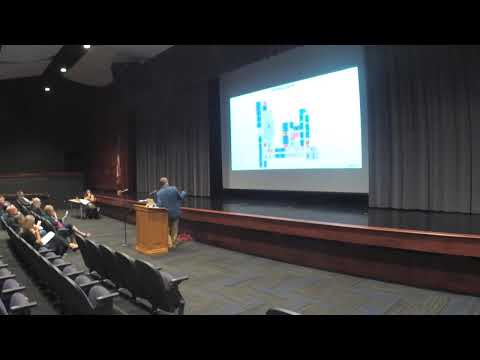
The Montoursville Area School District on Aug. 26 held an Act 34 public hearing on a proposed consolidation that would close Loyola Sauk Valley Elementary School and add major renovations and additions to George C. Leiter Elementary School.
Superintendent Dan Tormina said the proposal responds to declining student enrollment and is intended to “create a more robust and equitable learning environment while ensuring fiscal responsibility and long term sustainability for the district.” He told attendees the district considered seven options and selected Option 3: close Loyola Sauk Valley and consolidate students at Leiter with comprehensive renovations and additions.
Architectural and site details presented by Scott Cousins (Factory and Associates) called for roughly 19,000 square feet of new construction with renovation of the existing ~68,000-square-foot building; the project would increase Leiter’s capacity to about 750 students (the presentation listed the closed school’s capacity as 575 and Leiter’s existing capacity as 325). Cousins described circulation changes to separate parent drop-off and bus routes, two retained ball fields, a new secure vestibule and an upgraded administrative suite, plus classrooms for special education and STEM instruction.
Cousins also explained the district’s cost-estimating approach using legacy Plancon-style accounting to separate new-construction costs from renovation costs for Act 34 calculations. He gave preliminary estimates of about $7,600,000 for new construction and about $12,000,000 for renovations — a combined construction estimate of approximately $19,700,000 — and said the board adopted a maximum building construction cost of about $7,899,126 under the Act 34 calculation. He warned that Act 34 rules require a new hearing if that construction cost is exceeded by more than 8% when bids are received.
Lawrence Stadel, an underwriter with Raymond James, reviewed financing alternatives and recommended a district general obligation bond as the most economical option. Stadel said the district expects to use roughly $6,000,000 of its own reserves toward the project and outlined a bond structure likely issued in 2026. He said those assumptions initially produced a roughly 1.02 mills burden but, with operational savings from consolidation (estimated at about $450,000 annually), the net millage impact would fall to just south of 0.5 mills. Estimated annual debt service after financing would be just under $4,000,000 through about 2041, the presentation said.
No members of the public signed up to speak at the hearing; Attorney Jeffrey Dovitz explained the 3-minute public-comment rule and said written comments will be accepted through Sept. 25, 2025. Dovitz also noted that the project booklet and proof of publication (Williamsport Gazette, 08/06/2025) were entered into the record and that a court stenographer was present to create an official transcript.
The district did not take formal votes at the hearing; the session was a required Act 34 informational hearing to present scope, cost and financing and to receive public comment. The administration indicated it intends to proceed to design and bidding steps and to pursue bond financing, with the next substantive steps being bid solicitation and any required follow-up hearings if costs exceed Act 34 thresholds.