Get Full Government Meeting Transcripts, Videos, & Alerts Forever!
Get email alerts on the Mental Health topic
No spam. Unsubscribe anytime.
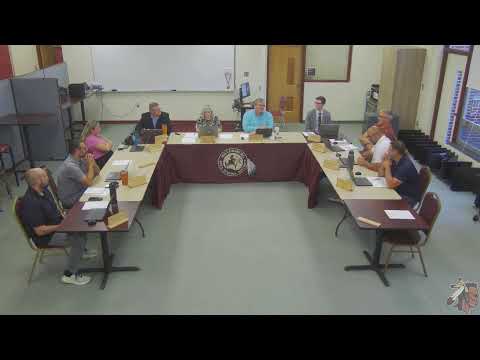
Millersburg administrators propose licensed day treatment program to serve students with behavioral and emotional needs
Summary
District administrators presented a plan to launch a DHS-licensed day treatment program (proposed name: Rise Up) housed in on-campus space beneath the Johnson library, aiming to start small and apply for DHS inspection this fall with a target opening in January.
An administrator for the Millersburg Area School District on the evening presented a proposal to establish a Department of Human Services–licensed day treatment program to serve students with emotional and behavioral challenges, saying the district would submit an application this fall and aim to open in January.
The presenter described the program as a half-day academic schedule combined with half-day specialized programming (social-emotional curricula and team-building) and said the district would provide academic instruction through its online academy with Pearson while using evidence-based social-emotional curricula. The proposed location is an underused room beneath the Johnson library with a separate entrance on Center Street, separate bathrooms and locked doors that would allow the program to operate separately from the rest of the school population.
On licensing and referrals, the administrator said day treatment is licensed by the Department of Human Services (not the Pennsylvania Department of Education) and that the district would seek DHS inspection and policy review as part of the application process. He said there are 24 licensed day treatment facilities in Pennsylvania and that the closest facilities to Millersburg are 30 miles or more from the district, making a local option desirable for families.
Safety and operations were a focus in the presentation and follow-up questions. The district proposed staggered start and end times, separate transportation routes and vehicles, a no-cell-phone policy, controlled daily entry procedures including wanding and searches with noncompliance resulting in students being sent home, and family case management for students with juvenile probation involvement. Staffing would initially include one district administrator overseeing the program, a lead mental health worker and an additional full-time mental health worker; the district said it has two administrators with prior day treatment experience.
On capacity and budget, the presenter said the DHS application would seek licensure levels up to 30 students for that facility but emphasized the district would start much smaller "with just 8 or less students" to develop procedures and oversight. Board members pressed for concrete budget figures; the presenter said he would provide the districtwide budget and startup cost details later and that the program is expected to bill referring agencies and districts to offset costs so the program could ultimately be revenue-neutral for the district.
Board members and staff discussed alternatives including off-site facilities, startup costs, and the availability of administrators qualified to operate the program; one board member urged starting with a smaller pilot (2–6 students) and then scaling. The presenter said letters of support were already discussed with Halifax and Upper Dauphin and that Dauphin County juvenile probation would be a primary referral source.
The board did not take a formal vote on the program at the meeting. Administrators said they would post the presentation and supporting materials online and return with budget information and facility measurements as required by DHS before the application is finalized.