Get Full Government Meeting Transcripts, Videos, & Alerts Forever!
Get email alerts on the Facilities topic
No spam. Unsubscribe anytime.
Kutztown Area School District weighs $26 million facilities plan; summer HVAC package and possible Greenwich elementary closure draw heavy public comment
Summary
District administrators presented a feasibility-based facility plan (Model 3) and a scoping-level summer HVAC package (middle school) with estimated net cost just under $5.0 million after a $475,000 Act 34 grant; financing advisers outlined options including use of the $15 million bond proceeds and potential restructuring that could push the district's total debt service up unless grants/operational savings offset costs. Parents read a 642-signature petition asking the board to keep Greenwich Glen Hartsville Elementary open.
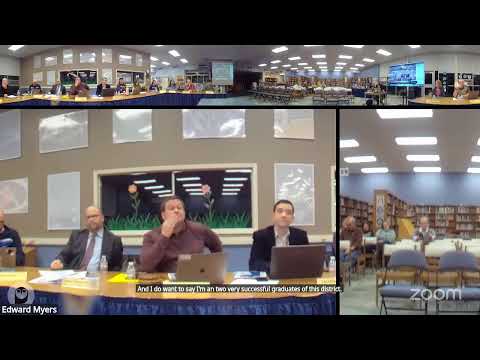
Kutztown Area School District leaders presented a multi-part facilities update on March 3 that combined short-term work (a recommended summer HVAC package at the middle school) with the longer-term feasibility study the district has been running since 2022.
Administrators and consultants described a preferred "Model 3" option that focuses on targeted additions and reconfigurations rather than building multiple new elementary schools. EI Associates said Model 3 would add about 7,700 square feet versus 22,000–25,000 square feet for larger options and would address roughly $8.0 million of ranked deficiencies across district buildings while keeping the district's instructional capacity aligned with projected enrollment (about 1,374 students).
At a scoping level McClure representatives outlined specific work for the middle school: classroom HVAC replacements, new air handlers for larger spaces, a rooftop DX unit for the band room, kitchen HVAC upgrades, panel and pumping work and some exterior maintenance. McClure estimated the full middle-school HVAC and associated scope at about $5,500,000; after an Act 34 grant award of $475,000 the presenters said the net project cost would be "just under $5,000,000" and that breakout pricing (HVAC vs. library reconfiguration) would be provided at a final presentation scheduled for April 7. McClure said it expects to return on April 21 asking the board to commit to the summer work.
Raymond James gave a market and debt overview, noting the district borrowed $15 million in November 2024 under a small-issuer exemption that allows the proceeds to be held and invested for up to three years. Using that $15 million as part of a financing plan, their illustrative model showed that doing the full $26 million scope discussed in presentations would likely raise the district's annual debt-service run rate from about $2.225 million to roughly $2.95 million (an increase equivalent to about 1 mill) unless additional grant funding or operational savings were realized. Raymond James used a conservative assumption of $5.0 million in RCAP grant funding in the model; they also showed an example of borrowing an additional $6.0 million to do the summer HVAC work and then restructuring existing debt later to smooth the tax impact.
Board members pressed for clear decision points and statutory timing. Administration noted Pennsylvania law requires roughly 90 days' public‑hearing notice for a formal school-closure decision, making an expedited July decision unrealistic without preliminary steps. The administration recommended either (a) authorize staff to prepare financing documentation and return with final numbers in April or (b) set a formal timeline and hearings for any school-closure action.
Public comment focused on community impact and district finances. Michelle York, speaking for the Greenridge PTO, read a petition with 642 signatures urging the board to keep Greenwich Glen Hartsville Elementary School open "indefinitely," calling the small school a "heartbeat of our community" and warning of longer commutes and social impacts if the school closes. Other commenters questioned how many staff positions might be lost under consolidation; the administration said the model assumes staffing reductions largely handled through attrition and projected roughly 2–3 instructional positions as a planning figure, with additional support-staff changes possible over time.
Administration and consultants emphasized schedule and risk trade-offs: land-development approvals are the critical path for any addition or consolidation work and can take 12–15 months; conversely, some HVAC work could be accomplished in a single summer with off-hours work for items not completed before reopening. Presenters said they would continue to refine scope and pricing and would include projected operational savings in future financial models.
Next steps: the presenters said they will provide breakout pricing for the HVAC and library components on April 7 and will return on April 21 for a board vote to commit to summer work. The district's finance team said it could begin preparing rating calls and other documentation with a March "head‑nod" authorization so the board could act formally in April; trustees signaled they would consider placing a preparatory authorization on the March 17 agenda and the formal resolution on the April voting agenda.
Why it matters: The package combines urgent maintenance (ranked 1–3 deficiencies) with a larger campus-reconfiguration decision that would affect staffing, transportation times, and school identities. The board must balance the near-term need to control rising HVAC maintenance costs against community concerns about school closure and long-range fiscal impacts.