Get Full Government Meeting Transcripts, Videos, & Alerts Forever!
Get email alerts on the School Budget topic
No spam. Unsubscribe anytime.
Conestoga Valley board sets 2.75% millage, adopts budget and related measures
Summary
On June 16 the Conestoga Valley Board of School Directors approved a budget package and set a 2.75% millage rate in a 6–2 roll-call vote; officials said the district still projects a deficit without additional state aid and stressed preserving reserves and long-term debt capacity.
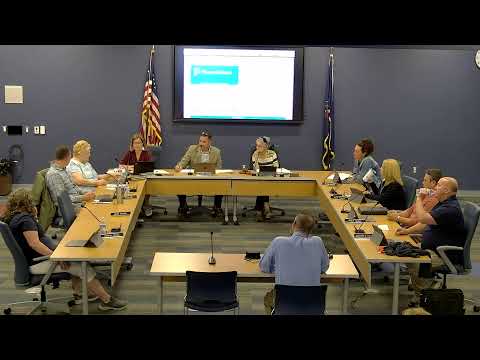
On Monday, June 16, the Conestoga Valley Board of School Directors approved the district budget package and set the tax rate at a 2.75% millage increase, adopting agenda items A, B and C by a 6–2 roll-call vote.
The chair framed the vote as binding for the tax rate and said the board owed the public an explanation because an earlier posted decision had indicated a different rate. A district finance director presented two scenarios: a 2.5% millage would leave a roughly $1.3 million deficit, while a 2.75% millage would leave about a $1.2 million deficit. The director added that if the district receives the second 50% of the Ready to Learn Adequacy Supplement from the state, the shortfall would shrink materially (the director estimated the gap could fall to roughly $500,000 under that scenario).
“We are still above the 15% (reserve guidance) but that’s chipping away at us little by little,” the Director said, describing a current fund balance just over $15,000,000 and a long-term debt load the district must manage. The director also told the board that Standard & Poor’s recently placed the district at an AA‑ (double A negative) rating and noted that excessive draws on reserves could raise future borrowing costs.
Board members pressed for context on known and potential revenue changes. The Director said the district spends about $1.6 million a year on cyber-charter tuition and that changes in state policy (including possible cyber-charter tuition reform) or changes in the Act 1 index could materially affect the district’s options and future millage flexibility. He also noted that acceptance of the Ready to Learn Adequacy Supplement restricts the district’s ability to file for certain exceptions such as special-education-related exceptions.
The board also approved two related motions: (1) commitment/assignment of fund balance and the annual suspension of the per-capita tax (a routine resolution the district has used for about a decade), and (2) the superintendent’s annual raise of 3.63% as listed in her contract. The first reading of Policy 918 was completed with no objections.
The vote on the budget and tax rate was taken by roll call. The clerk recorded the roll call and the board approved the millage at 2.75% by a 6–2 tally.
What’s next: The district must file the adopted tax rate as required; administrators said they will return with additional detail and continue to monitor state funding developments that could change the budget outlook.