
DACF seeks one‑time public‑lands support and proposes ongoing Land for Maine's Future revenue source
Get AI-powered insights, summaries, and transcripts
Subscribe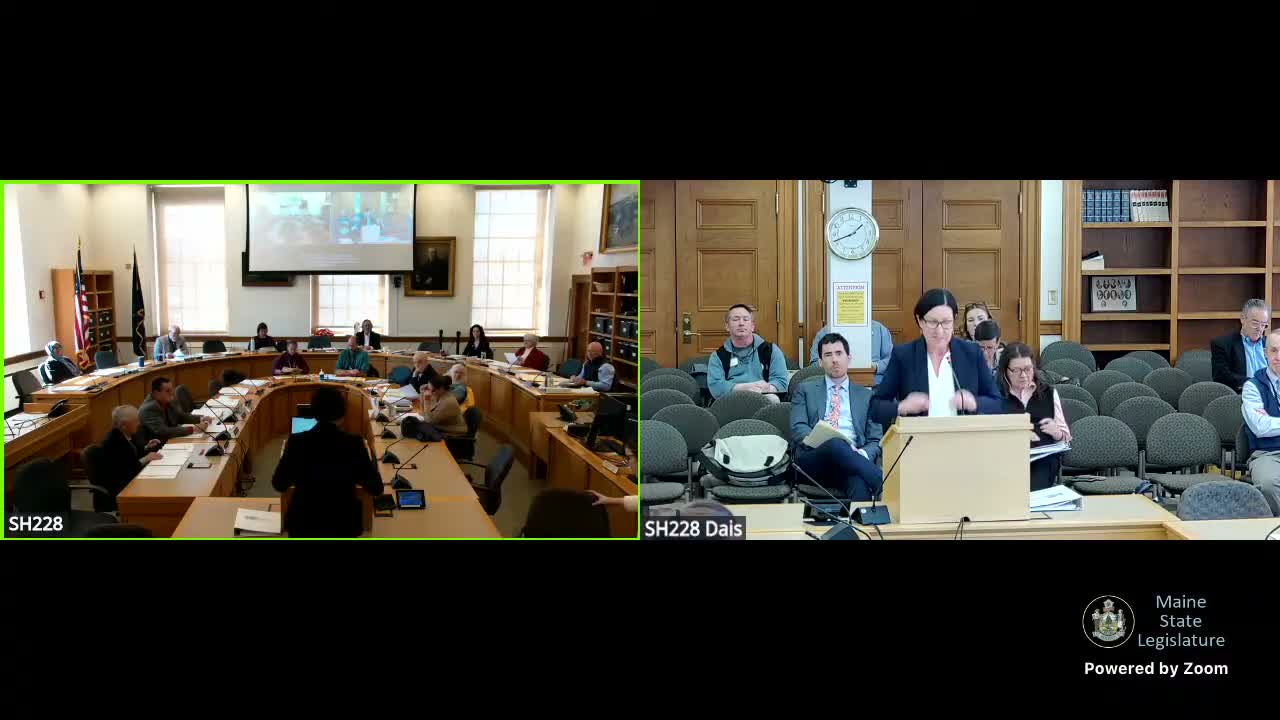
Summary
Commissioner Amanda Beal requested a one‑time $2.25M allocation to cover public-lands operating shortfalls caused by falling timber revenues and proposed language redirecting a portion of budget stabilization fund investment income to the Land for Maine's Future trust to provide ongoing conservation grants.
The Department of Agriculture, Conservation and Forestry testified on a package of initiatives intended to address urgent operational shortfalls and to create a more reliable revenue source for land conservation.
Commissioner Amanda Beal asked the committee to approve a one‑time appropriation of $2,250,000 to cover public‑lands operating expenses that had historically been sustained by timber revenues but are now strained by depressed markets. She said the department's funding model relies heavily on timber receipts and explained the shortfall's drivers—including market contraction and lower harvest receipts—and that the one‑time funding is intended to prevent service gaps while the department and stakeholders develop a longer‑term model.
Beal also proposed amended language to dedicate a share of budget stabilization fund investment earnings to the Land for Maine's Future trust fund. Commissioners from IF&W and Marine Resources supported the proposal, noting LMF's role in permanently protecting working waterfronts, farmland, recreational access and working forests and the program's historical reliance on intermittent bonds. IF&W Commissioner Judy Camuso and DMR Commissioner Carl Wilson said a predictable, interest‑based revenue stream would allow LMF to operate on a steady grant schedule rather than sporadic bond cycles.
Members asked for work‑session projections showing how much interest could be available under different budget‑stabilization balances; the department and stakeholders agreed to supply scenario tables and historic bonding comparisons.