Get Full Government Meeting Transcripts, Videos, & Alerts Forever!
Get email alerts on the Project Procurement Budget topic
No spam. Unsubscribe anytime.
Oversight committee reviews bond project priorities, budget structure and procurement options
Summary
The Sheridan SD 48J bond oversight committee reviewed security upgrades, asbestos abatement, a gym renovation and other prioritized projects; RNC Management Group outlined four work packages, contingency layering and procurement options including RFQs, possible CMGC and direct contracting.
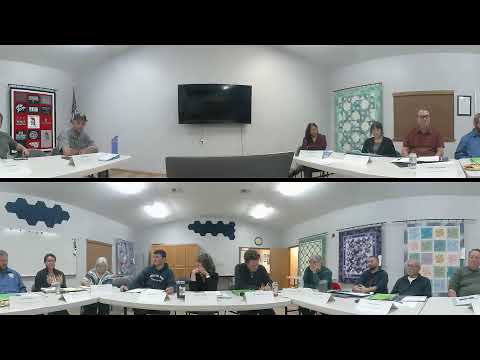
Members of Sheridan SD 48J's bond oversight committee spent the meeting reviewing project priorities and early budget framing for the recently passed bond and related premium funds.
Scott Rose of RNC Management Group described the procurement work already under way: RFQs and RFPs for architects, engineers and specialty consultants were issued and evaluated; six architect proposals were narrowed to three and interviews were completed the same day. Rose said the district will recommend a design team to the school board and build a qualified pool of professional service providers.
Rose outlined four work packages that will structure the program. He emphasized early focus on life-safety and fast-release projects that do not require a full building permit so some work could be awarded for summer 2026, while larger renovation work is scheduled for 2027: "We wanna start off strong with folks making sure that we have to tackle, you can get done... We wanna be thoughtful about that, have the designer move forward..." (paraphrased).
Specific project priorities discussed included secured entry and access-control upgrades (badge readers, intercoms), expanded security cameras and parking-lot lighting, asbestos floor abatement with required occupant exclusions, updates to science labs, HVAC work at Fulton Chapman and a comprehensive renovation of the high-school gym for acoustics, storage and a new floor.
On finance, Rose explained that the $6,000,000 bond sale produced premium dollars that increased available program funds (the transcript discussed roughly doubling available proceeds), and that budgets are organized with project-level contingencies plus a program contingency. He noted each project includes a roughly 10% contingency and the program contingency is an additional ~5% reserve to cover unforeseen items; a committee member asked whether that 5% was sufficient and Rose explained how the contingency layers work.
Rose also reviewed contracting approaches: an internal construction budget and an eventual guaranteed maximum price (GMP) are possible; the district could proceed with traditional design-bid-build hard bids, or use a negotiated construction-manager/general-contractor (CMGC) approach that brings a contractor on before final design. For smaller discrete work the team may use direct contracting (trade-specific bids) rather than a single large general contractor.
Rose set a program timing expectation of completing major bond work by 2027 to reduce inflation risk, with more detailed budget and schedule materials coming to the committee at the next meeting. He told the committee it must also comply with state reporting and reimbursement rules for the $6 million state match that accompanies the bond program.
Next steps include finalizing the recommended architect/engineer team for the school board, negotiating contracts, and presenting more detailed project budgets and schedules to the committee at the next meeting in roughly two months.