Get Full Government Meeting Transcripts, Videos, & Alerts Forever!
Get email alerts on the Student Achievement topic
No spam. Unsubscribe anytime.
Port Orford-Langlois board hears data on attendance, reading and math; staff outline interventions
Summary
School staff presented state and local assessment results and described Title I, MTSS and tutoring strategies aimed at lifting third-grade reading and middle-school math; board members urged family engagement and more academic competitions to boost student motivation.
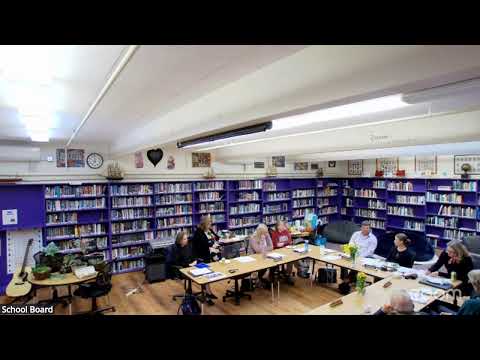
Port Orford-Langlois SD 2CJ school staff presented a packet of student-achievement data and a plan of targeted interventions at the board meeting on Feb. 28. Presenters said the district is using multiple funding streams — Student Investment Account dollars, high-school success funds and early-literacy grant money — to support reading and math interventions across K–12.
The presenter (speaker 3) told the board that the packet includes goals, prior-year and current-year performance and diagnostic data and that the district will meet with the Oregon Department of Education and building administrators to set criteria for the newly reported eighth-grade math measure. “When we focus on those things and we’re focusing on phonics and phonological awareness … then they get that down,” the presenter said, describing Title I literacy work underway in early grades.
Why it matters: Board members flagged third-grade reading as a priority because state research ties early reading proficiency to lower dropout risk later. The presenter said the district must move beyond basic decoding and strengthen comprehension: “We have a lot of work to do,” a school leader (speaker 1) said, pointing to a decline in state ELA results despite local gains on classroom measures.
Key details: Staff described multiple strategies already in place or planned: - Early-grades literacy: Title I is being used to fund phonics-focused instruction, DIBELS cadence tracking and a redesigned family night with instructional workshops so parents can reinforce literacy at home. - Attendance and engagement: The district uses a tiered attendance protocol (letters and family contact at defined absence milestones) and in-school incentives (monthly pizza or popcorn parties, postcards, weekly drawings) to reduce chronic absenteeism. - Math interventions: Teachers have formed small intervention groups for number sense and operations, using a purchased intervention curriculum and 30-minute group sessions four days a week. - MTSS and referrals: A standing MTSS team will collect Title I data, recommend three-week classroom interventions and, when progress is not evident, call parents and consider evaluations — naming Donna Johansenmeyer and the presenter as consistent MTSS members. - Secondary supports: High school staff track ninth-grade on-track status, assign mentor teachers, run after-school tutoring and credit-recovery programs and plan attendance-based incentives and end-of-year rewards to boost participation.
Board discussion: Members asked for more disaggregated, school-level views of the red/yellow/green proficiency bands and for evidence of individual student growth rather than only color shifts. Several board members recommended expanding academic recognition (spelling bees, science fairs and math competitions) to create non-athletic incentives. One board member said the district should do more to recognize “average” students with daily or weekly acknowledgments, not just athletic achievements.
Quotations: “You’re gonna hear some of that data,” the presenter said at the top of the session. On the role of the third-grade benchmark, the presenter added, “That is the reason why the third-grade reading benchmark is there. Statistics show pretty clearly that if we can get kids proficient at third grade, the percentage chance of them dropping out decreases significantly.”
Authorities and limits: The presenters referenced state assessment frameworks, DIBELS/diagnostic tools and district TAG (talented-and-gifted) criteria; no new ordinances or formal policy actions were proposed.
Next steps and outcomes: The board asked staff to return with more school-level and growth-data visuals, to continue coordination with ODE on the eighth-grade math measure and to explore regional academic-competition options. A procedural motion to adjourn was made and seconded late in the meeting; the transcript records the motion and second but not a roll-call vote.