Get Full Government Meeting Transcripts, Videos, & Alerts Forever!
Get email alerts on the Personal Electronic Devices topic
No spam. Unsubscribe anytime.
Pleasant Hill SD 1 reviews public-comment rules and proposed student device policy with Jan. 1 implementation target
Summary
At a work session, board members and staff reviewed revisions to public-comment procedures and a draft JFC policy on personal electronic devices (including smart watches), discussed storage and medical exemptions, and agreed to return the policy for further readings ahead of a Jan. 1 implementation date.
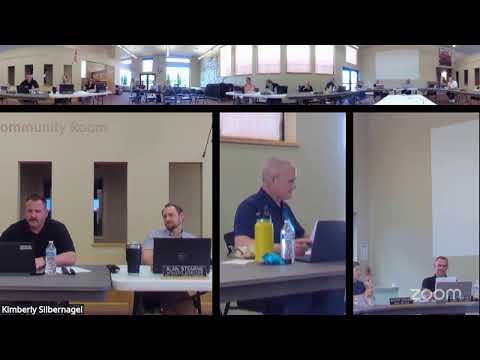
Robin, a presenter for Pleasant Hill SD 1, opened the work session by identifying three draft policies for review, including the public-comment procedures and policy JFC governing personal electronic devices and social media.
The presenter summarized the device policy’s key points: the district proposes to allow students to possess personal electronic devices but to restrict use during the school day except as authorized for instruction, to include smart watches in the definition of ‘‘personal electronic devices,’’ and to adopt exemptions for medical needs and individualized plans, including students covered by Section 504. "And then January 1, the new policy would go into effect," Robin said when outlining the implementation timeline.
Board members pressed staff on the practical details: who would store devices, what options would be available, and how to accommodate students with medical devices or IEP/504 accommodations. Robin described several possible storage approaches — locked pouches or classroom collection boxes used in some district classrooms — and said staff would survey building teams and pilot solutions before final adoption.
On public-comment rules, the presenter reviewed sign-in procedures for in-person and remote speakers, accessibility of meeting materials, and a default limit of three minutes per speaker. A board member asked whether commenters must state a full street address aloud; members generally agreed to revisit the exact wording and privacy implications at a future meeting rather than require public recitation of full addresses.
Members also discussed posting and accessibility requirements for the finalized policy. Robin noted that the policy must be posted on the district website and made available to staff, families and the Department of Education, and the board discussed adding closed-caption files to posted meeting videos to improve accessibility.
No formal motion or vote was taken at the work session. Board members directed staff to revise the draft language and return it for further review and the required readings; the draft timeline called for at least two readings before a final adoption date prior to the January 1 effective date.
Next steps: staff will collect feedback from school staff and community partners, prepare an updated draft for the board to review at upcoming meetings, and schedule the policy for formal readings before adoption.