Get Full Government Meeting Transcripts, Videos, & Alerts Forever!
Get email alerts on the Education K12 topic
No spam. Unsubscribe anytime.
Superintendent outlines enrollment, testing and attendance data as board coalesces around 'connectedness' priority
Summary
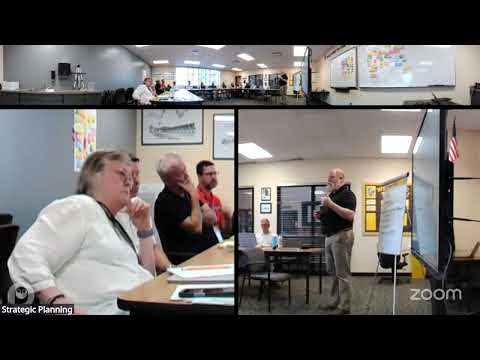
At a Philomath School District 17J board work session, the superintendent reviewed enrollment and state-testing participation data and the group used a SOAR-style exercise to surface priorities including systems of connectedness, safety and student supports. The facilitator will draft priorities for community review.
At a Philomath School District 17J board work session, the Superintendent presented enrollment and assessment participation figures and the board engaged in a priority-setting exercise that emphasized connectedness, safety and student supports.
The Superintendent reviewed recent enrollment snapshots and warned small changes in student counts can materially affect small-school finances. She said Blodgett Elementary started the year at 32 and ended at 28 and that the district views roughly 30–32 students as a break-even band for small schools. She also flagged that district figures were a quick pull from Synergy and could be off “by one or two kids.”
A major focus of the presentation was state assessment participation. The Superintendent said elementary participation rates were high (Philomath Elementary near the low- to mid-90s), while participation at the high school level was far lower (she reported Philomath High School participation around 37%, the Academy about 14.8% and Kings Valley about 30%). She explained that, for the district’s "percent met" calculations, she excluded students who opted out and cautioned that low participation in small cohorts can make the percentages unreliable. "If I were to include the whole at a higher rate of participation, that number would probably not be 69.2," she said, noting the calculation used only test-takers.
Board members asked whether state testing windows conflict with AP and other college tests; participants confirmed overlap and described testing fatigue and scheduling conflicts as reasons families sometimes opt students out. The Superintendent said local performance assessments are being elevated by a recent accountability bill and that the state board is expected to approve local-assessment options that can be administered up to three times a year to provide more timely, locally relevant measures.
The facilitator summarized community survey results and a prior work-group product, highlighting community trust, staff–student relationships and career and technical education as strengths. Areas flagged for growth included perceptions of safety (comments referenced bullying and racism), communications balance, technology, and the need for clearer visibility of priorities and progress.
Using a SOAR-style protocol and sticky-note clustering, the group identified emerging, actionable priorities. Several participants urged turning a recurring theme—community and family connectedness—into operational systems to increase attendance and engagement. "Develop systems of connectedness," the facilitator suggested as a draft priority to capture ideas ranging from family events and elementary hubs to internship and CTE pathways that create a through-line from early grades to high school.
The meeting also returned repeatedly to emotional and social safety and the need to make culture and belonging visible in classrooms (for example, students knowing purpose during morning routines). Participants discussed aligning SEL (social-emotional learning) and staff supports with operational planning rather than treating such work as compliance only.
The facilitator said she will aggregate the raw inputs, draft three priority areas aligned to the portrait of a graduate, and produce draft vision/mission language for board review. She recommended additional community listening sessions and inclusion of student voices before the board moves to formal approval. No formal motions or votes were recorded in the transcript.
Next steps: the facilitator will circulate draft priorities and supporting materials for further board review and community engagement, after which the board will consider formal adoption.