Get Full Government Meeting Transcripts, Videos, & Alerts Forever!
Get email alerts on the School Safety topic
No spam. Unsubscribe anytime.
Board discusses converting SRO contract role to district SSPS amid safety, liability and coverage questions
Summary
District staff proposed shifting the current SRO contract to a district-employed Student Safety/Prevention Specialist (SSPS) to emphasize prevention and classroom support; board members raised concerns about losing a dedicated officer for immediate calls, open-carry statutory constraints (ORS 166.37), insurance and staffing trade-offs.
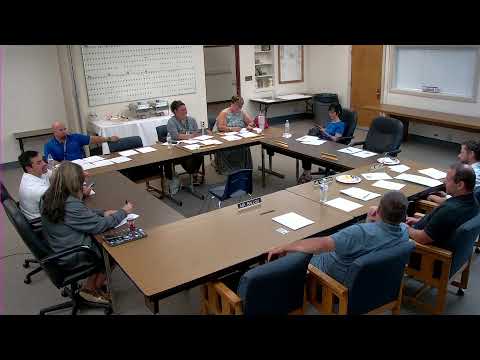
District staff presented a proposal at the July 7 work session to convert the current School Resource Officer (SRO) contract into a district-employed Student Safety/Prevention Specialist (SSPS), shifting the role from law-enforcement citation authority toward prevention, classroom support and threat-assessment duties.
"It's exciting," the presenter said when describing the SSPS focus on prevention, classroom support and family engagement, while noting that the employee would no longer be an officer with citation authority. The presenter referenced state statute while discussing weapons policy: "It's ORS 166.37. It talks about possession of firearm for dangerous weapon in public building or court facility... it says concealed weapons," noting that statutory language bears on how the district frames any weapons or carry policy on school grounds.
Board members and district staff exchanged questions about trade-offs. Several members emphasized the value of a uniformed, dedicated SRO who responds to calls for service and argued that converting the position could reduce the district’s immediate response capacity during emergencies, since a district SSPS would split duties across multiple sites and could be reassigned during competing calls for service. The presenter acknowledged those concerns, saying a district SSPS would be "a different sort of resource" and that the district is weighing the give-and-take between prevention work and immediate-response capacity.
Board members asked for specific contract and cost details, insurance and liability information, and examples from other districts. The presenter agreed to gather that information and return it to the board: "I'll give you what the contract looks like, but then I'll give you the number as well so you can kinda see the difference." Board members asked for that information within about a week.
No formal vote was taken on the proposal during the work session; the discussion concluded with a direction for staff to collect contract details, insurance guidance and budget implications for the board to review at a subsequent meeting.