Get Full Government Meeting Transcripts, Videos, & Alerts Forever!
Get email alerts on the School Meals topic
No spam. Unsubscribe anytime.
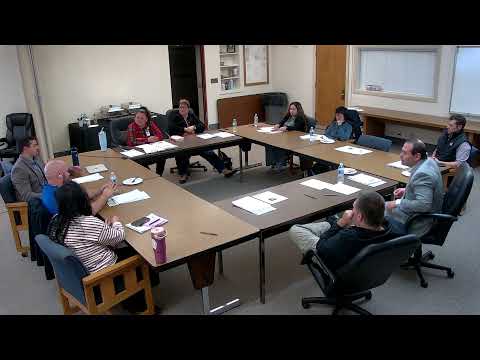
Nyssa SD 26 hears food-service review as staff warn of staffing and budget strain
Summary
At a Nov. 3 work session the Nyssa SD 26 board heard a detailed food nutrition briefing: staff described USDA meal rules, rising costs, 67 students with special-diet needs and chronic staffing shortages, and reported the food-service account was about $51,552 "in the red" as of Oct. 31.
Gina, the district's food-service presenter, told the Nyssa SD 26 board on Nov. 3 that the district runs multiple federal- and state-funded meal programs and must meet detailed USDA nutrition and labeling requirements to receive reimbursements.
The board heard that the district participates in a 27-district Treasure Valley bid group to buy in bulk, which staff said has cut item prices substantially; Gina said the group's buying power has likely reduced costs by roughly 40 percent. She described the USDA ordering calendar (major ordering in March) and emphasized districts must set menus and place orders well in advance to secure predictable supplies.
Gina said products need either a product statement or a Child Nutrition (CN) label to qualify and that manufacturers sometimes face high certification costs: "I think it was like $300,000," she said, referring to the expense of obtaining a CN label for a product. She also described program rules that affect menu choices (whole-grain minimums, sodium and trans-fat limits and recent sugar restrictions) and noted the district uses a four-week menu rotation after student and parent surveys.
The presentation highlighted service logistics and accommodation burdens: "We've got 67 kids this special diets this year, which is insane," Gina said, explaining the need for doctors'notes, building-level bans on specific foods for allergy safety (for example, bananas or pineapple in some buildings) and the extra labor required to prepare alternative meals.
Staffing shortages were a central operational concern. Gina said the cafeteria staff frequently work short-handed and that the first 35 days of the school year included only a handful of days with a full complement of staff; she described daily multitasking that stretches remaining employees. Board members asked whether adding staff or substitutes would expand the district's ability to serve more home-cooked meals; Gina said home-cooked items can be cheaper by ingredient cost but are more labor-intensive and therefore require more staff hours.
The board also reviewed recent food-service finances. A board member reported the program had closed fiscal year 6/30/2025 about $117,237 in the negative before an interfund transfer; staff reported the food-service account was approximately $51,552 "in the red" as of Oct. 31. Gina said food prices (eggs, produce, supply chemicals) have fluctuated since the March ordering cycle, making it hard to match budgeted prices to midyear market changes.
The presentation included operational details for field trips and snacks (full components must travel with field-trip meals, and breakfast rules differ from lunch), and a note that grab-and-go options help keep many high-school students participating despite open-campus policies. Gina gave daily participation estimates: about 670 breakfasts, just under 900 lunches and roughly 300' 500 snacks per day.
Board members and staff closed the topic by discussing community outreach: the district has sent a letter to families about food needs, is assembling supplemental weekend food boxes (about $5 per child per weekend box) for roughly 100 families per week, and plans to route donations through Community in Action and counselors to reach students with food insecurity.
What happens next: staff said they will provide winter/spring budget projections and, if the board chooses, the district can include funding for additional staffing or substitutes in the spring budget cycle.