Get Full Government Meeting Transcripts, Videos, & Alerts Forever!
Get email alerts on the District Finance And Policies topic
No spam. Unsubscribe anytime.
Nyssa School District 26 board approves SIA grant agreement and adopts multiple policy updates
Summary
On Dec. 8 the Nyssa School District 26 board accepted a roughly $4.3 million Student Investment Act grant agreement for 2025–27 and separately adopted a package of policy updates covering budget committee rules, graduation requirements and student records, after staff outlined uses and accountability measures for SIA funds.
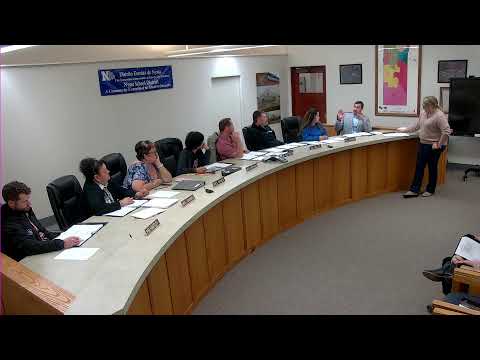
The Nyssa School District 26 Board of Directors voted Dec. 8 to accept the Student Investment Act (SIA) grant agreement for the 2025–27 biennium and to adopt a series of policy updates the board reviewed over the fall.
The superintendent’s staff presented the 28‑page SIA grant agreement, saying the district will receive funds covering 07/01/2025 through 09/30/2027 and that the grant is intended to support student mental and behavioral health, increase academic achievement and reduce disparities for historically underserved student groups. “When all said and done, about $4,300,000,” the superintendent said of the total allocation for the district.
Why it matters: SIA funds must be used consistent with approved plans and reporting requirements; the board signaled that the district will invest the money in positions and programs designed to support counselors, nurses, student‑safety staff, reduced class sizes, SEL curriculum and expanded enrichment opportunities.
In the public presentation, staff explained eligible student groups prioritized by the state — economically disadvantaged students, students from racial or ethnic groups with historical disparities, students with disabilities, English‑language learners, students experiencing homelessness, students in foster care and other groups designated by the State Board of Education — and described the district’s planned uses (school counselors and nurses, a student success and community outreach coordinator, class‑size reduction teaching positions, wellness snacks and SEL supports). The presenter also described the grant timeline and the obligation to spend funds within the window and align expenditures with state reporting.
Board action: The board moved to accept the SIA grant and budget agreement (motion by Maribel; seconded by Donnie). Following public comment and brief questions about measurement and accountability, the presiding officer called for the vote and announced the motion carried.
Policy updates: Separately, the board handled a block of policy actions the administration had revised and circulated. Items approved included updates to budget committee policy, instructional materials and records policies, graduation requirements language (including provisions on diplomas for veterans), and revisions recommended by the Oregon School Boards Association to improve pronoun usage and align policy text with legal standards. One policy related to a board stipend was removed from the packet for further study.
Financial context and accountability: During discussion, board members and staff emphasized benchmarks and interim assessments the district will use to track SIA outcomes (attendance, grade‑on‑track, graduation indicators, ELA and math), and staff said those measures would be presented to the board alongside the district’s state report cards in January. A board member asked about long‑term outcomes after students leave the district; staff said that multi‑year follow‑up is not currently tracked and offered to explore how the district could measure post‑school outcomes.
What’s next: The board’s acceptance of the grant enables the district to proceed with the SIA budget as submitted to the state. Staff said additional details, benchmarks and interim assessment data will be shared with the board in January as part of routine reporting.