Get Full Government Meeting Transcripts, Videos, & Alerts Forever!
Get email alerts on the State Budget topic
No spam. Unsubscribe anytime.
MESD government relations official previews short legislative session, warns of tight K‑12 budget
Summary
Lisa Merrick of the Multnomah Education Service District told the Gresham‑Barlow board the short legislative session (Feb. 2–Mar. 9) will be compressed and could force difficult choices for K‑12 funding because of federal tax changes and a challenging revenue forecast.
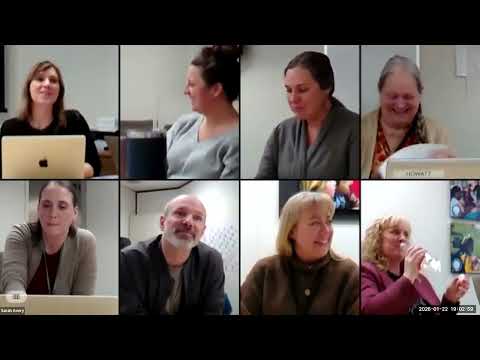
Lisa Merrick, government relations advocate with the Multnomah Education Service District, told the Gresham‑Barlow School Board on Jan. 22 that Oregon’s upcoming short legislative session will be compressed and likely define how much the state can preserve for K‑12 budgets.
“We are about to enter into the short legislative session,” Merrick said, describing a six‑week sprint that starts Feb. 2 and must end by March 9. She called the February 4 revenue forecast “a key date” and said committees face tight deadlines for bills to move through their first and second chambers.
Merrick framed the chief fiscal challenge as lower state revenue linked to recent federal tax changes. She cited the December state revenue estimate showing net general fund and lottery resources up by about $318,000,000 from the prior forecast but still roughly $635,000,000 below the session‑close forecast. “We went from about $400,000,000 in the red to $80,000,000 in the red,” she said, noting the picture could change after the Feb. 4 forecast.
She urged board members to press lawmakers to protect K‑12 funding and pointed to reserve options the legislature might tap, including the Education Stability Fund and the state’s Rainy Day Fund. Both funds have special rules for access; Merrick said they have been used before and can be accessed with supermajority votes and, in some circumstances, an urgency declaration.
Merrick highlighted several bills likely to affect districts: a transportation funding package that remains contested, proposals to strengthen protections and funding for school meals, measures to codify McKinney‑Vento protections, bills increasing reporting on chronic absenteeism, and proposals affecting immigrant and refugee students (including school notification requirements when federal enforcement is present around campuses). She also said the corporate activity tax (CAT), which funds parts of the Student Success Act, is lower than previous years but that the legislature has reserved funds in that account.
Board members asked detailed questions about how the budget scenarios would affect local priorities and whether the district should press for fewer unfunded mandates as part of cost‑containment. Merrick encouraged continued communication and invited participation in a regional advocacy day scheduled for Feb. 13, when school board members can meet lawmakers in Salem.
Why this matters: the short session’s compressed timeline and revenue uncertainty could force choices that affect classroom staffing, program funding and local compliance obligations. Merrick’s briefing gave the board specific dates and policy areas to monitor as the session unfolds.