
Greater Albany leaders warn of roughly $10 million deficit as enrollment falls
Get AI-powered insights, summaries, and transcripts
Subscribe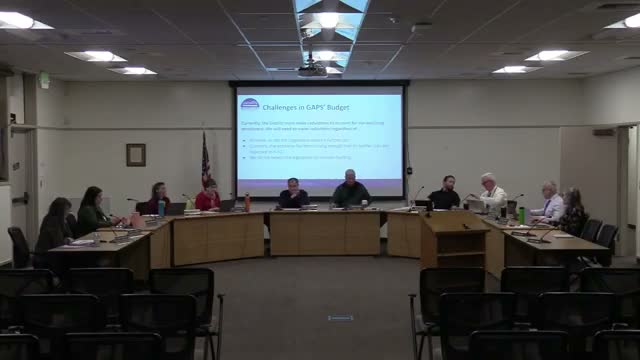
Summary
Superintendent and finance staff told the board the district faces about a $10 million shortfall for 2026–27 driven primarily by a loss of roughly 360 students and ODE recalculations; leaders outlined reserves, special funds and a long-range committee to recommend rightsizing options.
The Greater Albany Public School District’s superintendent told the board at a special work session that the district will need to make reductions after a sustained enrollment decline and state funding changes produced a roughly $10,000,000 projected shortfall for 2026–27.
“The district is going to have to make reductions due to declining enrollment and some funding pressures from the state government,” the superintendent said, framing the presentation as a work session to align the board and staff on next steps. District finance staff then presented updated enrollment and revenue projections showing ODE’s revised ADMR and a drop in the district’s weighted counts.
Jane (finance director) said ODE updated the district’s 2025–26 ADM downward (projecting about 8,273) and that combined step/cola and PERS cost increases (about $4.6M and $1.7M, respectively) plus lower resources leave the district “looking at about a $10,000,000 deficit.” She characterized the figure as a rough estimate that could change as ODE and the legislature update forecasts.
Why it matters: state-level actions and enrollment changes both affect the district’s bottom line. The superintendent cautioned that a reported “no cut” posture by the legislature refers to a funding share assumption (51%) but does not prevent district-level revenue losses tied to enrollment or other state adjustments.
Supporting details: the presenters described several funds and balances the district is using to smooth short-term pressure — a technology capital fund (~$1,000,000, with a $200,000 planned transfer), a student activity fund (~$1,200,000), Medicaid funds (~$1,500,000) used in part to support programs, a bond fund with an opening balance of about $4.7M (already reduced this year), and an excise tax fund (~$3,000,000) restricted to new construction or property acquisition. Jane said the district has been building reserves to avoid exhausting balances and identified about $14,000,000 in facility needs.
The board discussed the need to “right size” operations to match enrollment and to preserve a responsible reserve level. One trustee noted auditors had warned the district about multi-year deficit spending; Jane confirmed 26–27 would represent the third consecutive deficit year under current assumptions.
Next steps: the superintendent and staff said they will bring detailed cost-per-student analyses to the long-range committee and then to the board; that committee is expected to develop recommendations the board could consider between June and September. The superintendent also said staff will share the budget materials with bargaining units and continue to update projections as ODE and legislative actions unfold.
The board took no formal budget action at the session; the meeting ended with a routine motion to adjourn.