
Gresham‑Barlow board warns of $7.5M–$13M gap; staff map personnel-heavy cuts and RIF timing
Get AI-powered insights, summaries, and transcripts
Sign Up Free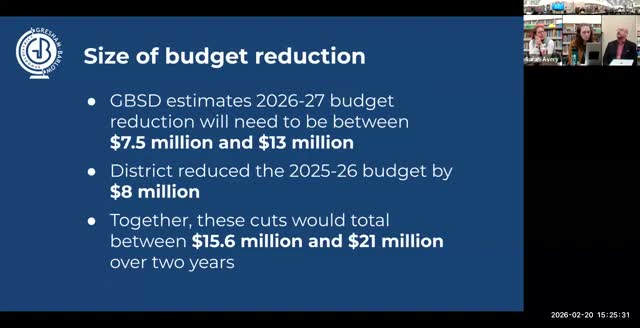
Summary
District finance staff told the board the next fiscal year could require $7.5 million to $13 million in reductions, adding to roughly $8 million cut this year; most savings must come from personnel, and staff urged planning now to avoid chaotic midyear RIFs.
Gresham‑Barlow School District finance staff told the school board at a Feb. 20 strategic‑planning retreat that the district faces a likely budget gap in the next fiscal year of roughly $7.5 million to $13 million, on top of about $8 million of reductions already taken this year.
Pete, the district finance presenter, said the combination of rising payroll and utility costs, flat state and federal grants and declining enrollment forced the district to develop multiple reduction scenarios. “We are estimating that in the 26–27 year we will be cutting somewhere between 7.5 and 13,000,000,” Pete said, adding that combined two‑year reductions could total $15–21 million.
Those dollar ranges translate into substantial staffing impacts: Pete explained that roughly $1 million of cuts equates to about seven licensed full‑time‑equivalent positions, so a $10 million reduction would be on the order of 70 teaching FTE if achieved entirely through licensed staff reductions. He emphasized that most district expense is personnel and that there is limited nonpersonnel spending large enough to close the gap without cutting people.
The superintendent and finance staff described a two‑stage strategy if a reduction‑in‑force becomes necessary: the district must cut to the likely worst‑case target and then add back if state or federal revenue arrives. That approach is driven by contract and timing constraints; staff warned that trying a smaller cut and repeating a RIF later is impractical and harmful because the RIF process is administratively and emotionally burdensome.
Board members asked about alternatives that would lower staffing impacts, including reducing school days or shifting nonrecurring revenue; staff responded those are short‑term fixes that do not solve the long‑term structural gap and could carry union or legal complications. The board directed staff to continue scenario planning, refine equity‑centered prioritization questions, and keep community and labor partners informed.
Next steps: staff will refine the draft reduction lists, align those reductions to school level and program impacts, and return with updated scenarios and communications plans during upcoming budget‑committee meetings.