Get Full Government Meeting Transcripts, Videos, & Alerts Forever!
Get email alerts on the District Goals topic
No spam. Unsubscribe anytime.
Cascade SD 5 presents ambitious K–12 goals, credits tutoring and RTI for graduation gains
Summary
District leaders on Oct. 13 outlined five K–12 goals — including an 85% graduation target for focal groups and an 80% third‑grade proficiency aim — and described tutoring, RTI tiers, math coaches and transportation supports credited with recent graduation‑rate improvements.
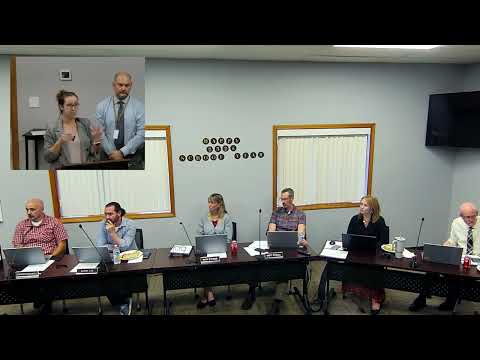
Cascade SD 5 administrators presented a set of five K–12 goals at the district’s Oct. 13 work session, highlighting gains in graduation rates for key student groups and new supports aimed at raising early‑grade proficiency.
Dr. Dyer, who led the goals presentation, said the district set an 85% graduation target for focal groups and reported current graduation rates of 90% for economically disadvantaged students, 92.3% for English learners and 88.5% for students receiving special education services. “When we’re talking about focal groups, we’re talking about economically disadvantaged, English learners, as well as special education,” Dr. Dyer said.
Why it matters: the goals drive how the district uses targeted funding and staff time. Dr. Dyer told the board that the integrated plan funds — Student Investment Account dollars, Measure 98 high‑school funds and early‑literacy grants — support the tutoring, coaching and coaching positions credited with gains.
Administrators described concrete supports used to lift outcomes. Tony, who presented details on secondary supports, said the High School Opportunity Center offers math tutoring twice weekly with a certified teacher, has added weekly science tutoring and runs ELD tutoring four days a week; transportation is provided for students who need rides home after tutoring so access is not a barrier. “We do a lot of awesome things throughout the High School Opportunity Center,” Tony said, summarizing the extra instructional time and supports.
At the elementary level, leaders described three‑tier RTI (response to intervention) work: benchmark and progress monitoring to identify students in Tier 2 or Tier 3 and targeted interventions delivered by reading specialists or instructional assistants. Administrators reported using Acadience (DIBELS) benchmarks for early reading and iReady and MyPath for math progress monitoring through the year.
District math coaches Shannon Stinnett and Margaret Hill — roles funded from SIA dollars, Dr. Dyer said — were cited as correlating with stronger iReady performance and better state test readiness. Administrators emphasized that outcomes improve when teachers and coaches coordinate across grade‑level PLCs and when classroom practice is consistent across schools.
The board questioned whether adding initiatives risks overburdening teachers. Presenters said RTI blocks, reading specialists and PLC collaboration are designed to redistribute work so classroom teachers are not expected to deliver all interventions alone.
Next steps: the district will continue progress monitoring and use the integrated plan funding to sustain tutoring, coaching and early‑literacy work; no formal board vote was recorded on the goals during the session.