Get Full Government Meeting Transcripts, Videos, & Alerts Forever!
Get email alerts on the Education Programs topic
No spam. Unsubscribe anytime.
Academic advisor outlines new student supports, career-path pilot and FAFSA help
Summary
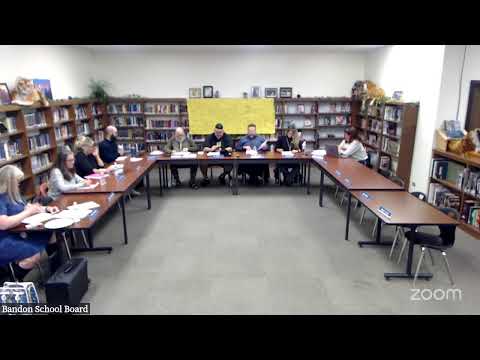
Megan Cline, the district high-school academic advisor, briefed the Bandon School District board on partnerships (Aspire, TRIO, Recruit Hippo), a pilot semester course to meet Oregon Senate Bill 3 requirements, work-based learning and FAFSA help for students and families.
Megan Cline, the high school academic advisor, told the Bandon School District board that the district is expanding partnerships and course offerings to support postsecondary transitions and career pathways. She described work with Aspire, TRIO and an employer-driven program called Recruit Hippo to provide mentoring, field trips, tuition waivers and paid work-based placements.
"It is a lot better this year," Cline said of FAFSA operations compared with the previous year’s rollout, and said she has been helping seniors and some recent graduates navigate the application process. She urged families with problems to contact her for help.
Cline reviewed local postsecondary intentions from recent senior meetings: roughly half of students reported plans to attend college, about 28% were considering trade schools, 7% expressed interest in military service and 11% planned to enter the workforce immediately. She said those figures came from interviews with every senior this week.
She told the board the district will pilot a semester-long course covering the higher-education/career-path skills and personal-finance credits that Oregon’s Senate Bill 3 will require beginning in 2027, noting that the state is changing elective-credit distribution but not the overall 24-credit graduation requirement. "We're going to pilot this class and offer it to our seniors next year," Cline said.
Cline also announced a semester-two wildland firefighting course that will certify students as Type 2 firefighters and provide high-school credit; about 10 seniors have already signed up, with expected enrollment of 15–20 students, and students who qualify can earn summer wages in the $20–$25-per-hour range.
Board members raised follow-up questions about dual-credit enrollment and work-experience logistics. Cline said juniors and seniors can take work-experience and may have up to three periods released for on-the-job learning; at peak participation she estimated about 40 students with roughly 20 students holding three-period release schedules.
The presentation also covered testing and diagnostic scheduling (NWEA/NOIA math and reading, i-Ready diagnostics) and district plans to use those results to qualify students for intervention services. Cline and board members discussed outreach strategies after low response to a special-education family survey and offered one-on-one meetings to protect confidentiality.
Next steps described to the board included piloting the semester course in the coming year, continuing individual FAFSA assistance, and expanding work-experience and field-trip opportunities tied to the district’s outside partners.