Get Full Government Meeting Transcripts, Videos, & Alerts Forever!
Get email alerts on the Budget Staffing topic
No spam. Unsubscribe anytime.
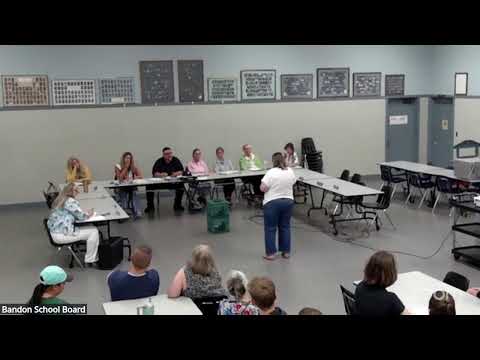
Bandon School District warns of tightening budget as enrollment falls and staffing rises
Summary
Administrators told the board that declining enrollment and rising staff full-time-equivalents could push the district over its adopted budget, potentially requiring a supplemental budget; presenters cited a $3.4 million beginning balance, a possible $106,000 near-term overage tied to proposed salary changes, and a higher-risk multi-year scenario.
The Bandon School District heard a detailed budget and staffing presentation that showed a narrowing financial picture and growing pressure from staffing costs.
The district presenter said the general fund began the year with about $3,400,000, above the $3.1 million the board had budgeted, but cautioned that audit adjustments and the timing of expenditures could reduce that balance. "We came in a little bit above that, which is nice at about 3,400,000," the presenter said.
The presenter flagged two risk scenarios tied to proposed salary and benefit changes. With a potential BEA agreement in place, the district would be roughly $106,000 over the adopted budget for licensed salaries and benefits; in a stressed scenario where all appropriated expenditures occur, the presenter said the projection shows a roughly $2.7 million deficit by the end of the following fiscal year. "With the changes that are in the BEA, proposed contract, we're gonna be a little over a $106,000 in the general fund over what was budgeted," the presenter said, later adding that the worst-case model would produce a multimillion-dollar shortfall.
Administrators said the district is evaluating operational changes to mitigate the gap, including not automatically filling every vacancy when staff retire, and examining class and schedule adjustments. The presenter said the district has started conversations about not replacing some positions as people retire "unless they absolutely have to," and noted the district will avoid classes under a size threshold except in specific cases.
The presentation relied on comparative analytics from the Oregon Department of Education showing declining enrollment alongside rising full-time-equivalency (FTE) staffing in recent years. The presenter summarized that while enrollment dropped, FTE increased, which has compressed student-to-staff ratios and worsened budget pressure. "We're in declining enrollment," the presenter said. "Enrollment is tied directly to funding."
Board members and audience members asked for more granular breakdowns, including the ratio of administrative staff to students. The presenter said ODE's dashboard did not include an admin-to-student breakdown in the data they were using and offered to follow up to obtain that detail.
The superintendent-level presentation linked the budget outlook to potential next steps: if actual expenditures exceed appropriations in any function, the board would need to approve a supplemental budget to pay those bills. "If we're going to be going above what was appropriated in any of those functions, then we need board approval to be able to pay those bills," the presenter said.
The board did not take final budget action at the meeting; the presentation served to inform members about the district's projections and to begin discussion about potential staffing and program options ahead of future decisions.
The district plans to share the underlying charts and ODE PDFs with the board for closer review, and presenters said they would return with more detailed breakdowns by building and by administrative category if available.