Get Full Government Meeting Transcripts, Videos, & Alerts Forever!
Get email alerts on the Education Report Card topic
No spam. Unsubscribe anytime.
Pickerington Local keeps a 4 on state report card; early literacy and college-career readiness lag
Summary
Pickerington Local School District retained an overall 4 rating on the state report card but officials flagged early literacy and the new college-career-workforce measure as weaknesses. Leaders cited falling kindergarten-readiness scores, cohort effects and larger class sizes and outlined targeted interventions.
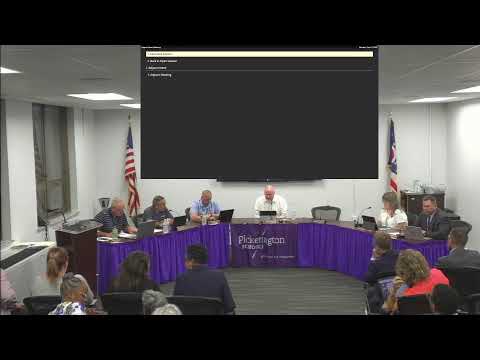
The Pickerington Local School District presented its 2024–25 state report-card results to the school board on Monday, keeping an overall rating of 4 while identifying early literacy and college-career-readiness as areas needing improvement.
Dr. Smialek said the state classifies the district as one that "exceeds state standards," noting the district—arned strong scores in gap-closing and several school-level achievements. "We exceed state standards," he said, and asked the board and community to view the report card as one snapshot among many.
Dr. Gillison, who led a component-by-component review, said the district scored very well in gap closing and math achievement but earned 2s on early literacy and the new college/career/workforce/military readiness component. "We are going to continue to thrive for 5," he said, describing both celebrations and next steps.
Officials pointed to several causes for the weaker early-literacy score: declines in kindergarten readiness assessment (KRA) figures over recent years, differences between half-day and full-day kindergarten across neighboring districts, rising class sizes and varying preschool participation. Dr. Smialek said KRA rates have fallen and that the district is asking whether more students are arriving to kindergarten without preschool experience. He said the district is "aggressively exploring the addition of all-day kindergarten at a revenue-neutral perspective." He emphasized this is exploratory and would not be dependent on May ballot outcomes.
The board heard that some component and cohort results can swing dramatically with small group sizes: Pickerington Academy ropped from about a 91% graduation rate to 67% year-over-year largely because the earlier cohort had 11 students and the later cohort had 94, producing volatility in percentages. Dr. Gillison noted the academy is a nontraditional program and that small cohorts can produce large percentage changes.
To address weaker areas, district leaders described actions already underway: quarterly data reviews, a district continuous-improvement plan aligned to building plans, 100-day building action plans, targeted professional development for K–3 teachers, tiered supports for students needing accelerated interventions, additional counselor and administrator training around postsecondary pathways, and family-facing workshops (FAFSA and college/workforce application assistance).
Board members pressed presenters on whether changes in state metrics ("moving the goalposts") and incomplete college-readiness reporting affected the scores. Staff said the college-career-military measure is new and that increased familiarity with reporting and coding could help lift future results.
The presentation closed with a timetable of family workshops and outreach; staff invited the public to a college-application and workforce workshop Oct. 18 at Pickerington High School North.
The board id not take a formal vote on policy changes at this meeting; presenters framed next steps as data-driven interventions and potential future policy options to be brought back for consideration.