Get Full Government Meeting Transcripts, Videos, & Alerts Forever!
Get email alerts on the Education Policy topic
No spam. Unsubscribe anytime.
Pickerington leaders outline literacy, engagement and transport goals; all‑day kindergarten proposed
Summary
Senior leadership presented 2025–26 goals including an early‑literacy target (66.4% to 75.5% by 2028), a Family Engagement Council, HR and special‑education staffing plans, transportation on‑time metrics starting at 85%, facility capacity planning and an asset inventory/dashboard.
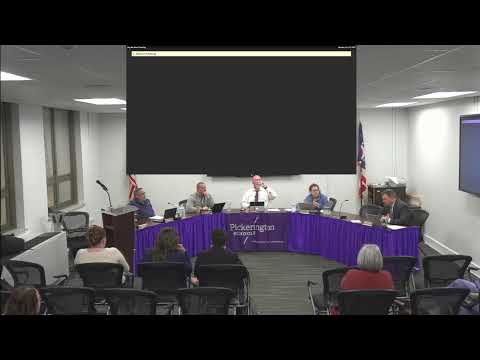
Senior leaders at the Oct. 27 Pickerington Local School District board meeting laid out a set of operational and academic goals the district plans to pursue in 2025–26, including a quantified literacy target, a new family‑engagement body and changes to transportation and facilities planning.
Academic services leadership said the district aims to lift early‑literacy scores on the Ohio State test by an average of 3 percentage points per year — moving from 66.4% to 75.5% by June 2028 — through strengthened instructional leadership and targeted professional development. The presenter said these measures are part of the district’s continuous improvement (District 1) plan. (Speaker S7)
A Family Engagement Council is planned as a representative body of 13 members — staff, families, community members and two students — that will meet at least four times per year with an 80% attendance goal and provide structured feedback to senior leadership and the board. The council’s role is to identify barriers to engagement and co‑create strategies for two‑way communications. (Speaker S7)
In HR and staffing, Dr. Hedgepath outlined a plan to standardize hiring, develop exit‑interview data and create a special‑education staffing plan for 2026–27 based on trend data and projected need. She said the district will schedule semester check‑ins with building administrators to address issues proactively. (Speaker S14)
Rob Weinheimer, the chief operating officer, described a transportation initiative to track K–6 afternoon on‑time performance with a progressive target that begins at 85% and will rise after sustained success. He described a routing playbook, AM/PM guardrails (no pickups before 6:30 a.m. or drops after 4:45 p.m.), quarterly ridership counts and special‑education route reviews; Weinheimer said some special‑ed runs can cost roughly $90,000 per route. He also described a new facility capacity/utilization plan and an asset‑inventory dashboard (FMX) to guide capital planning and replacements. (Speaker S13)
Superintendent staff also previewed broader initiatives including a possible future discussion of all‑day kindergarten; the superintendent said the district had surveyed 427 parents and will present a coherent plan after the election and once the new board configuration is known. The administration emphasized careful planning — including transportation solutions and teacher steering committees — before making formal proposals. (Speaker S3)
Why it matters: The presentations translate strategic priorities into measurable targets (literacy percentage goals, council membership/attendance, transportation on‑time metrics) and operational changes that will influence hiring, budgeting and capital planning.
What happens next: Senior leadership will continue work with the board and consultants as needed; some items (staffing plans, capital schedules, any proposal to expand kindergarten) will require further board action before implementation.