Pickerington staff outline parents’ role in special education, from referral to transition planning
Loading...
Summary
Special education coordinators from Pickerington Local explained how families can initiate referrals, participate in evaluations and IEP meetings, review procedural safeguards, and prepare for transition planning beginning around age 14.
Scott Webster, a special education coordinator for Pickerington Local, and Jessica Goodrich, a school psychologist, led a recorded public forum for families explaining how parents can engage in the district's special education process.
"You're equal partners in the special education process," Webster said, stressing that parents' knowledge of their child's strengths, challenges and out-of-school supports is central to planning. The presenters urged families to be active throughout referral, evaluation, eligibility and IEP meetings and to provide documentation such as medical evaluations and observations from home.
Goodrich walked through the referral and evaluation sequence and its timelines. She said families or staff can request an evaluation verbally or in writing but recommended following verbal requests with written notice so the district's 30-day evaluation timeline begins. "We have those 30 days to come together determine if we suspect a disability," Goodrich said, explaining the planning meeting that identifies what assessment areas the team will investigate.
The presenters described informed consent as more than a signature: parents should attend planning meetings, ask clarifying questions about assessment areas, and request changes to planning forms if new concerns arise during the evaluation process. If families disagree with evaluation findings, Goodrich said the district seeks collaborative solutions and will outline next steps on a case-by-case basis.
Webster summarized IEP development and team membership, noting required participants such as a district representative (the special education coordinator), the general education teacher, and the student's special education teacher or intervention specialist. He recommended that districts share a draft IEP in advance so families can prepare questions and evidence.
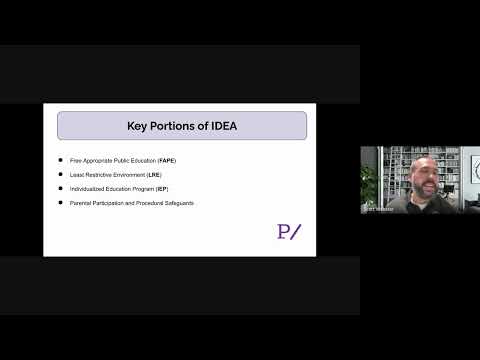
On placement, Webster explained the district's duty to provide a free appropriate public education in the least restrictive environment appropriate for each student and described a continuum of services from general education with supports to more restrictive settings. He emphasized that "any changes to the student's placement require your consent" and a team meeting to discuss the change.
The presenters also reviewed IEP monitoring and reporting: goals are monitored and families receive progress reports (the district sends updated progress reports roughly every nine weeks, typically near grade-card time). Webster pointed attendees to Ohio's procedural safeguards document, which outlines parent rights such as access to educational records and prior written notice; presenters noted the document is available in multiple languages through the Ohio Department of Education and that the district will share it at least annually.
Transition planning was described as beginning around age 14 and included postsecondary goals related to education/training, employment and independent living. Webster said the focus is to build student self-advocacy and to align supports with long-term goals.
They closed by asking participants to complete the post-session survey and to contact Scott Webster, Jessica Goodrich, Malika Jefferson, Allison (Lisonbee was referenced earlier), or their building coordinator with follow-up questions. The session was recorded for posting on the district website.
The forum provided families practical steps for participating in each stage of the special education process and highlighted timelines, consent requirements, progress reporting and transition planning as the primary points for parent involvement.