Get Full Government Meeting Transcripts, Videos, & Alerts Forever!
Get email alerts on the Education Assessment topic
No spam. Unsubscribe anytime.
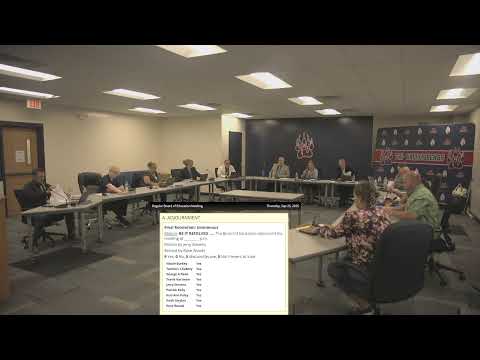
Tri Valley staff present i‑Ready results and pilot Ready Math; district adds supplemental instructional time
Summary
District presenters Erin Long and Frank Snyder told the board that year-two i‑Ready diagnostics let staff track cohort growth and target interventions; the district is piloting Ready Math in selected grades and has restructured schedules to add supplemental instruction for math and other subjects.
Erin Long and Frank Snyder presented assessment results to the Tri Valley Central School District Board of Education, saying the district’s second year using i‑Ready enabled more precise cohort tracking and individualized instruction across grades 3–8 and for Regents preparation. “Data truly doesn’t even have any emotion,” Long said, adding it is “a mirror of what we’re doing and where we are.”
Snyder summarized year-to-year and 12‑year trend analysis and said the district sees clear strengths and recurring gaps: fourth grade is outperforming state averages in both ELA and math, while fifth-grade ELA has been stagnant and middle‑school math shows dips. He said i‑Ready’s projected-proficiency feature correlated well with ELA results but less so with math, which prompted the district to pilot Ready Math in kindergarten, second, fourth and sixth grades at no cost to the district.
Why it matters: presenters framed the move as a combination of better diagnostic insight and curriculum alignment—i‑Ready yields national-level diagnostic data and a projected state‑exam proficiency metric that helps staff target interventions before state tests. Snyder noted that algebra II participation increased this year (more students took the exam) and that algebra II pass rates moved to 52% in the district’s January/June data, down from a 100% rate the prior year when far fewer students took the exam.
The district also described schedule changes intended to increase instructional minutes without expanding the school day: Snyder said the secondary schedule now provides roughly 90 additional supplemental math periods and about 30 more sessions each for science, ELA and social studies by converting some study‑hall time into targeted instruction while keeping students with their core teacher for supplemental sessions.
Presenters described professional learning communities (PLCs), additional professional development from Ulster BOCES, and classroom tools to support nonfiction reading and writing. They cited a pilot of Notebook LM (a multi-format classroom resource) and what the transcript records as “Newsela” (corrected from a transcript phonetic), which pairs leveled nonfiction with Lexile measures aligned to the district’s reading data.
Board members asked how honors or algebra students were represented in the data; Snyder clarified that eighth‑grade honors students who took algebra were excluded from the graphs shown and offered to provide additional detail on August retakes and other disaggregated counts. He also said pilot grade levels were chosen by volunteer teacher teams to ensure there were local advocates to evaluate viability.
Next steps: staff offered to supply follow‑up detail (for example, August retake counts and disaggregated algebra participation) and will continue PLC work and targeted interventions in math and nonfiction reading.