Get Full Government Meeting Transcripts, Videos, & Alerts Forever!
Get email alerts on the Education Mental Health topic
No spam. Unsubscribe anytime.
Yale researchers propose three‑year, community‑led mental‑health model for Southampton schools
Summary
Yale University presenters told the Southampton Union Free School District board they will move from a year‑long needs assessment into a staged, three‑year training and supervision plan developed with Shinnecock Nation members to improve cultural inclusion and student mental‑health supports.
Yale University researchers presented a multi‑year plan to the Southampton Union Free School District board on strengthening culturally informed mental‑health supports for indigenous and district students.
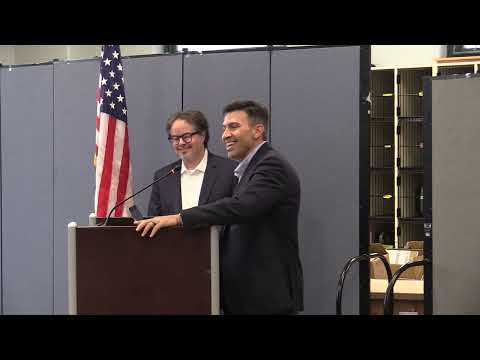
Dr. Chris Feder, a counseling psychologist with the Yale Child Study Center, and Dr. Mark Bridal, a clinical psychologist and Yale faculty member, said their team completed a community needs assessment that included "31 interviews" with district staff and Shinnecock Nation members and identified gaps in communication, cultural inclusion and professional development. "We wanted to find out from the community what do they want and what do they see," Feder said.
The researchers described a staged approach they said is designed to build local capacity while avoiding what they called "drift" — the tendency for practices to diverge from a validated model over time. Under the plan, year 1 emphasizes assessment and planning with community input; year 2 begins implementation and training with supervisory checkpoints; and year 3 moves to a train‑the‑trainers model so local staff can sustain the work without constant outside presence. "Year 3 is what I love," Feder said, describing the goal of mentoring trainers so "you don't need this anymore."
Mark Bridal said district and nation stakeholders largely agreed on the need for more frequent, transparent communication, but differed in tone: district staff tended to report a generally positive school climate while nation interviewees gave more mixed or negative appraisals. Researchers said short‑term goals include improved communication and curriculum adjustments; medium‑ and long‑term goals include increased inclusion, academic supports, post‑secondary planning and targeted professional development.
Board members and an audience member pressed the researchers on how the model would address historical trauma and prevent drift. The researchers said the process will be co‑designed with community members through repeated touchpoints—monthly or bimonthly meetings with Shinnecock Nation representatives and district leadership—and that Yale would remain available as a touchstone for supervision beyond the initial phases. "We will be touchstones that we can keep coming back in," Feder said.
The president noted the district has a contract for this year and said the board is exploring follow‑on contracting for subsequent years to support the researchers' planned work. The researchers did not provide a dollar amount or a full budget in the presentation; cost details and formal contracting steps were described as "to be determined."
The board welcomed the team and indicated it will continue discussions about timelines, contracting and community engagement as the district moves toward implementing the plan.