Get Full Government Meeting Transcripts, Videos, & Alerts Forever!
Get email alerts on the Grade Configuration topic
No spam. Unsubscribe anytime.
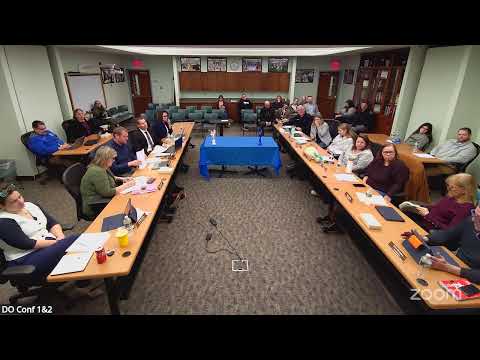
Rondout board pauses fourth‑grade relocation committee, cites need for more research and cost concerns
Summary
After a year of work, the board directed administrators to pause the district‑led fourth‑grade committee and research options including redistricting and cohort models; members cited transportation estimates of roughly $800,000 and asked for clearer timelines and communication with committee volunteers.
The Rondout Valley board voted to pause a district‑led committee exploring whether to move fourth grade into elementary schools, directing administrators to research additional instructional models and fiscal implications before restarting the effort.
Administrators said the original district‑led committee had completed its charge of exploring feasibility; they recommended a reset to gather deeper data and potentially reconvene under a different charge. Board members and committee participants said they were surprised by the public announcement of a pause and urged the administration to communicate directly with committee volunteers about next steps.
A central concern raised during the discussion was the projected transportation cost of a cohort model. The administration presented route modeling and said an expanded transportation plan could cost approximately $800,000 in new bus runs to keep ride times under the district’s target. Board members emphasized the need for clear cost estimates and asked whether redistricting or capital‑project changes could create alternative solutions.
Several community members and board members said the committee had produced valuable data and needed explicit recognition; multiple trustees suggested sending committee members a summary of the decision and the rationale for the pause. The district agreed to provide additional research, a clearer timeline for future committee work, and a plan for communicating with stakeholders.
No formal policy change was adopted; the board’s action was procedural—pause, research, refocus—and will lead to follow‑up reporting and possible formation of a new committee with a broader charge.