Get Full Government Meeting Transcripts, Videos, & Alerts Forever!
Get email alerts on the School Budget topic
No spam. Unsubscribe anytime.
Rondout Valley candidates back 2025–26 budget at forum, call for clearer spending details
Summary
At a public hearing and candidate forum, school-board hopefuls urged passage of the proposed 2025–26 Rondout Valley Central School District budget while pressing for clearer breakdowns of per-pupil costs and program impacts. Administrators warned a failed budget could force a contingency plan that cuts nonmandated programs.
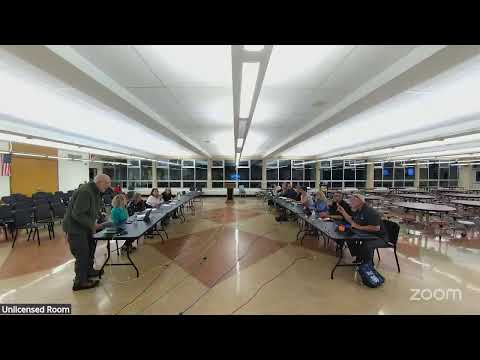
A public hearing and "meet the candidates" forum for the Rondout Valley Central School District on May 6 centered on the administration's proposed 2025–26 budget, which district staff said carries a projected 2.32% increase in expenditures and a roughly $4.0 million shortfall that the administration proposes covering with appropriated fund balance and reserves.
Assistant Superintendent for Business Tabitha Deguin outlined the budget, saying the proposed tax levy increase — discussed at the meeting as about 4.18% — would generate roughly $1.9 million. She warned voters about the consequences if the budget is defeated: "If it's defeated the second time ... you are basically stripped down to what's required to educate a student, classroom education and regular home to school transportation," Deguin said, describing the limits of a contingency budget.
The forum, moderated by high school teacher John Soy, gave nine candidates for three seats time to outline qualifications and answer audience questions. Every candidate present said they supported passing the 2025–26 budget, citing the risk that a contingency budget would eliminate nonmandated programs that candidates and administrators described as important to students.
"Strong schools mean strong communities," candidate Dimity Palmer Smith said when explaining why she supports the budget and wants clearer public information about spending priorities. Multiple candidates urged greater transparency and tools to help voters understand how funds are allocated and what would be cut under a contingency budget.
A member of the public raised an item cited in local coverage: a 47,000-per-pupil figure. The questioner said that publicly available reports showed roughly $47,000 per pupil; presenters responded that the state’s per-pupil calculation excludes categories such as debt service, certain BOCES costs and some transportation. Deguin pointed the audience to state data and the district’s online materials for detailed line items and said the district projects enrollment at about 1,700 students.
Candidates also discussed student achievement, anti-bullying work and communication. Several referenced the district’s climate survey and said they would press for more disaggregated data and follow-up. On bullying, candidates described existing programs (including No Place for Hate and newcomer/peer-support efforts) and suggested curricular or structural steps such as daily advisory groups or reinstating a DEI coordinator and committee to strengthen accountability.
The forum gave voters a clear view of where candidates stand on the central local question before May balloting: sustain the proposed budget to avoid program cuts, while improving the district’s outreach and clarity on how taxpayer dollars are spent.
The board also handled routine agenda business later in the meeting and approved two curriculum recommendations (described separately). The public-comment period included a safety question on electric school buses that the administration offered to address in a follow-up meeting.