Get Full Government Meeting Transcripts, Videos, & Alerts Forever!
Get email alerts on the Testing Results topic
No spam. Unsubscribe anytime.
District testing report shows widespread gains, highlights subgroup gaps and chronic absenteeism
Summary
Rondout Valley’s director of state data presented three‑year trends showing increases in ELA and math proficiency across most grades, notable cohort gains and persistent gaps for students with disabilities, economically disadvantaged students and chronically absent students; the board asked for further disaggregated review.
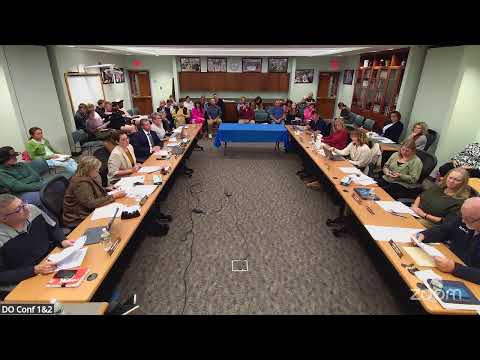
Alex Namm, the district’s director of state data, told the Rondout Valley Central School District Board of Education on Oct. 14 that most grade levels showed year‑over‑year increases on state assessments but that persistent subgroup gaps remain.
"For the most part, pretty much every grade level, we saw increases last year," Namm said, summarizing a three‑year trend report the board had asked to disaggregate. He highlighted double‑digit cohort gains in several grades and singled out strong gains in fourth, fifth and sixth grades.
The presentation showed third‑grade proficiency at about 57% and district‑level increases in elementary math and ELA in multiple schools. Namm said the district recorded a 22% year‑over‑year increase in one cohort and cited a 31% gain for a seventh‑grade cohort compared with their sixth‑grade results.
Namm said the district also recorded "a large performance gap" between general education students and students with disabilities and noted lower proficiency for economically disadvantaged students and a strong relationship between attendance and test outcomes. He said 65% of homeless students were chronically absent in the examined period and that chronically absent students scored markedly lower.
Board members praised the "glows and grows" framing and asked for the deeper disaggregated slides the curriculum committee reviewed. A board member said the FastBridge internal screener also showed improvements and that fewer students required academic intervention services.
Namm recommended targeted interventions — stronger tier‑2 and tier‑3 supports, co‑teaching effectiveness and literacy interventions — to close gaps. He said the district will continue to examine cohort trends and testing administration caveats, including that some advanced eighth‑grade students do not take the same tests, which affects comparisons.
The presentation also covered state Regents and June administration results: the district reported high pass rates in living environment and algebra among advanced students, and several subject‑level increases (for example, an 8% rise in one science grade). Namm noted that county comparison charts were not yet available because the state had not released all county numbers.
The board did not take formal action on the data but asked staff to bring additional disaggregated detail and to continue examining attendance and suspension patterns as part of the district’s improvement work.