Get Full Government Meeting Transcripts, Videos, & Alerts Forever!
Get email alerts on the Threat Assessment topic
No spam. Unsubscribe anytime.
District presents behavioral threat-assessment protocol to board; committee to roll out forms and reporting
Summary
Patchogue-Medford administrators outlined a new multidisciplinary behavioral threat-assessment model aligned with U.S. Secret Service and Dewey Cornell guidance, emphasizing it is not a criminal or disciplinary process and describing forms, a decision tree and pilot supports for early intervention.
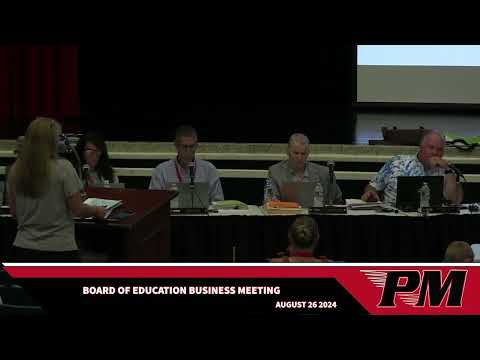
Administrators presented the Patchogue-Medford Board with a new behavioral threat-assessment protocol on Aug. 26, describing forms, a decision tree and supports intended to identify concerning behaviors early and provide interventions rather than punishments.
Carolyn Candela, who co-led the committee that developed the protocol, said the model draws on U.S. Secret Service guidance and the Dewey Cornell University framework. "It is not a disciplinary process," she said, explaining the protocol focuses on behaviors and provides a multiservice team response to determine threat credibility and appropriate supports.
The presentation outlined six assessment forms, a screenshot of a decision tree to guide administrators, a central reporting mechanism (modeled in the district's eSchool system) and plans to pilot a "Start With Hello" program at two elementary schools in partnership with the Suffolk County Sheriff's Office. Presenters repeatedly emphasized the model is case‑specific and intended to reduce harsh, automatic disciplinary responses for behavior that may reflect mental or emotional needs.
During public Q&A, residents asked whether legal liability exists if staff deem a reported threat non‑credible and an incident later occurs. Administrators responded that legal exposure can arise in many circumstances but that careful documentation, forms and multidisciplinary review are intended to support defensible decision-making and to balance safety with fairness. Administrators also noted that clear, intentional misconduct (for example, deliberate vandalism) will still be handled through existing disciplinary processes, which can include superintendent hearings when suspensions exceed district thresholds.
Next steps include training building administrators on the forms and decision tree during upcoming retreat sessions, sharing the OneNote and Teams folder with building teams, and instructing principals to stand up building-level multidisciplinary teams that include principals, APs, school resource officers, counselors, psychologists and support staff.