Get Full Government Meeting Transcripts, Videos, & Alerts Forever!
Get email alerts on the School Budget topic
No spam. Unsubscribe anytime.
Oakfield-Alabama board adopts $25.56 million 2025–26 budget to send to voters
Summary
The Oakfield-Alabama Central School District board voted to present a proposed $25.56 million 2025–26 budget to district voters on May 20, 2025; the plan uses roughly $479,000 in reserves, assumes a potential 3% boost in foundation aid, and will require a 60% supermajority to pass.
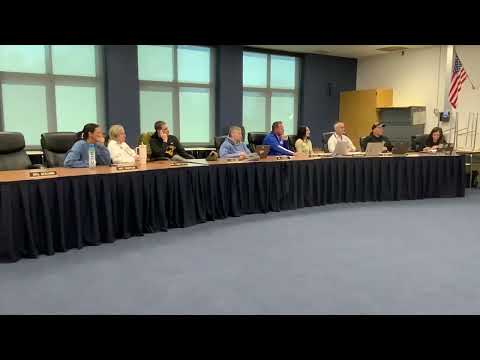
The Oakfield-Alabama Central School District Board of Education voted Wednesday to adopt a proposed $25,555,345 fiscal 2025–26 budget and submit it to district residents for a public vote on May 20, 2025.
Board members approved the motion by voice vote after a presentation from district staff explaining revenue assumptions, reserves use and expense changes. The board also approved the district’s 2025–26 real property tax report card.
District presenters told the board the proposal assumes total state aid of roughly $16.293 million under a scenario that includes a minimum 2% foundation-aid increase from the executive budget and a likely 3% increase that would add about $100,000 if the legislature’s proposals are enacted. The presentation flagged pilot agreements—four in total, including a new Edwards Vacuum pilot—at just over $1.1 million that materially affect the tax-cap calculation.
“By using about $150,000 out of the unemployment reserve and $329,000 out of the ERS reserve, we will still have those accounts overfunded per the district’s methodology,” Scott, a district presenter, told the board. He summarized the proposed total expenditures as approximately $25.56 million, a year-over-year increase of about 2.13%.
Staff said the budget relies on $242,000 less in appropriated fund balance than the current year and the planned use of roughly $479,000 in reserves to close the remaining gap. “We are using about $480,000 in reserves to cover the remaining gap that we do have,” a district staff member said during the presentation.
Because the tax-cap calculation is negative (presenters put the cap at negative 2.61), the district is budgeting a 2.5% tax levy and warned that the budget will require a supermajority — 60% approval — from voters to pass. The board authorized outreach to residents, including a budget newsletter and a public budget hearing scheduled for May 13 at 6 p.m., and said the May 20 vote will be open 11 a.m.–8 p.m.; the polling site will be announced.
On the expenditure side, presenters outlined staffing effects from retirements (seven FTEs affected, with only one replacement planned), benefit-cost increases (medical and prescription double-digit increases, dental up about 5%), a reduction to the capital transfer of $50,000, and equipment recommendations that include $454,000 for bus purchases and roughly $84,000 for other equipment.
To trim costs, the district eliminated summer school (about $11,000) and reduced a 0.6 FTE technology position (saving about $83,000). The board was also briefed on school-resource officer coverage: after a staff member named Jordan was promoted, the district plans to shift an SRO contract to a 10-month term to save an estimated $20,000–$25,000 and will meet with the Genesee County Sheriff’s Office and area superintendents to explore shared funding or contract options.
The meeting record shows motions on both the budget and the property tax report card were made, seconded and approved by voice vote; the transcript records “Aye” and “Motion passes,” but individual roll-call votes were not captured in the audio transcript.
Next steps: the district will publish the property tax report card within 24 hours, distribute voter information to residents, hold the May 13 public hearing and put the measure before voters on May 20. If voters approve the budget by at least 60%, the budget will move forward under the terms presented to the board.