Get Full Government Meeting Transcripts, Videos, & Alerts Forever!
Get email alerts on the Budget topic
No spam. Unsubscribe anytime.
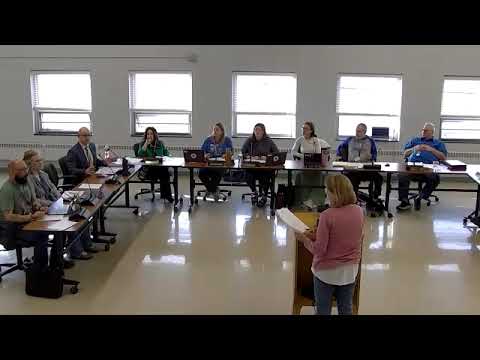
Honeoye Central presents Draft 2 of 2025–26 budget; administration trims $674,807 but a $949,324 gap remains
Summary
Business administrator Mike Bastian and Superintendent Fluke outlined Draft 2 of the 2025–26 budget, reporting $674,807 in reductions from Draft 1 that narrowed — but did not close — an expense‑to‑revenue gap now estimated at $949,324; administrators flagged rising health and insurance costs and said subcommittees will continue work.
Business administrator Mike Bastian presented Draft 2 of the Honeoye Central School District’s 2025–26 budget and told the board the administration had identified $674,807 in reductions from the March 5 Draft 1 but still projects an expense‑to‑revenue gap of $949,324.
"Grand total for changes from draft 1 to draft 2 is $674,807," Bastian said during the presentation, which walked directors through function‑by‑function changes and updated revenue assumptions.
The administration said the largest budget pressures are higher health‑insurance premiums, special‑education placements and rising utility and BOCES costs. Bastian noted state foundation aid in the district’s executive aid run rose only about 1.64% over last year, and that reliance on local tax levies has grown: the district’s allowable levy increase for 2025–26 was discussed as roughly 5.69% (about $587,000).
Superintendent Fluke described a set of targeted reductions that produced most of Draft 2’s savings: the district will not open a planned in‑district special‑education section (eliminating a projected teacher and teaching assistant), it will provide distance‑learning coordination in‑house rather than fund a $25,000 coordinator position tied to a grant, and it will pilot digital delivery of some routine mailings (an estimated $1,500). Draft 2 also removed a proposed bus driver and monitor and postponed some computer‑equipment purchases.
Fluke emphasized the administration tried to limit harm to students while trimming costs. "We don't want to reduce professional development opportunities for teachers because that's crucial to student success," she said while describing selective reductions and partnerships with neighboring districts to cut training expenses.
Board members pressed for clarity on use of reserves to cover one known emergency expense: the auditorium HVAC replacement. One member asked whether ERS contribution reserves or the repair reserve could fund part of the emergency work; Bastian said the district’s fiscal advisers and architect had concluded mid‑year draws from the ERS reserve were not allowable under current restrictions but that he would re‑examine repair‑reserve options and report back.
Administrators said Draft 2 shows the expense budget at about $20,000,008.95 and that revenue remains at roughly $19,090,041.02 under current state assumptions, leaving the $949,324 shortfall. They recommended continued work by the budget subcommittee, further analysis of user/reserve options and waiting for final state aid figures from Albany before the board considers a formal adoption date (the board will consider an April 9 adoption in light of the state timeline).
What’s next: staff and the budget subcommittee will continue to pursue cost savings and potential reserve options, and will update the board after additional information from the state and from fiscal advisers. The board did not adopt the budget at the meeting and left next steps to future subcommittee work and a possible April 9 adoption date.