
Curriculum committee debates pacing, coaching and 'exploration year' for K–2 ELA rollout
Get AI-powered insights, summaries, and transcripts
Subscribe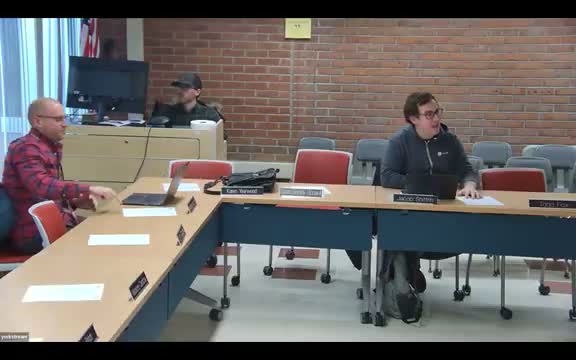
Summary
The Ithaca Curriculum Committee discussed a draft rotation for adopting elementary curricula, concerns about fitting recommended lessons into existing schedules, and plans for coaching and teacher-led advisory work to support K–2 English language arts (EL) implementation.
The Ithaca Curriculum Committee met in a work session to review a draft curriculum-rotation plan and to discuss supports for implementation, particularly for the new K–2 EL adoption.
The committee’s Chair (S2) opened the meeting, noted that some schools have moved off the support list, and asked members to consider structures that would sustain improvement rather than rely on a single accountability metric. Presenter (S4) described a watermarked draft that would put new curriculum on a multi-year rotation and called the first year the "exploration year," during which teachers and grade-level teams provide feedback before a full adoption.
Why it matters: committee members flagged a common implementation problem — curricula written for longer lesson blocks than the district’s schedules — and pressed for concrete time and staffing supports so teachers can implement materials with fidelity.
Presenter (S4) said the district has run scheduling workshops and outlined recommended "must-have" time allocations to protect core instruction and intervention time. S4 described existing supports: a 40-minute prep period, grade-level release days for module work, and every-other-Wednesday PLCs, and emphasized that "adopting a curriculum isn't enough. There's gotta be sustained professional development feedback loops for teachers to say this isn't working." (Presenter (S4)).
Committee members asked whether the district should define a "minimum student experience" for year 1 versus later years so that essential content is preserved while teachers learn new materials. Presenter (S4) proposed adding a column to the rotation/reflection chart to capture baseline expectations and noted the district uses data strategists and inter-school benchmarking to identify what worked at schools that showed improvement.
Staff member (S5), who leads work on EL implementation, described creating an advisory group of K–2 teachers to review modules lesson by lesson and to plan summer work that will help "turnkey" learning for other teachers. S5 said the district will pilot co-planning and co-teaching during coaching days so that teachers can both observe and practice new strategies.
Budget and staffing trade-offs came up repeatedly. Committee members debated whether to replicate a math-strategist model for ELA or to cycle focus areas from year to year. Presenter (S4) urged pairing classroom teachers and strategist roles with a mix of district-level coordination and school-based teacher leadership rather than simply adding positions without repurposing existing resources.
The committee identified immediate next steps: refine the rotation document to include minimum student-experience expectations, schedule summer PD and release days aligned to EL needs, and continue teacher-led advisory work. The Chair adjourned the meeting without a formal vote on the curriculum document.
Ending: The committee agreed to follow up on the draft rotation, timing and staffing proposals and to report back to the board and broader district staff as plans are refined.