Get Full Government Meeting Transcripts, Videos, & Alerts Forever!
Get email alerts on the Boces And Administrative Budget topic
No spam. Unsubscribe anytime.
BOCES superintendent Scott Budelman outlines regional services and administrative budget impacts
Summary
At the Feb. 12 Hamilton Central School District meeting, BOCES superintendent Scott Budelman reviewed regional CTE and technology services and presented the administrative budget, highlighting retiree health costs that raise the total administrative budget from $7.5 million to about $8.03 million and a modest 3.3% rise in direct administrative expenses.
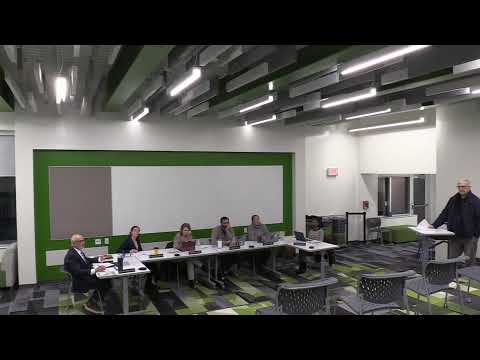
Scott Budelman, the district superintendent, told the Hamilton Central School District board on Feb. 12 that the BOCES organization is "very similar to a school district, but not identical," and walked trustees through how the regional cooperative operates and pays for services.
Budelman said BOCES is market-driven: "Just to let you know, BOCES does not have the power to levy taxes," and it does not receive state aid; the primary revenue source is participating school districts. He explained that many BOCES services are only provided when two or more districts request them and that participation agreements are made annually by May.
Why it matters: the structure affects how programs are funded and priced locally. Budelman said the regional information center and technology services cover multiple BOCES and roughly 49 school districts in the area, and that Career and Technical Education participation among juniors and seniors in the region has been consistently high (around 40–48%). He highlighted local results for Hamilton: the Class of 2025 had 15 two-year CTE completers (14 with technical endorsements); 37% pursued postsecondary education and 42% obtained employment related to their CTE programs.
Budget details: Budelman presented the BOCES administrative budget line by line. He reported direct administrative expenses increasing from $1,779,288 last year to $1,837,469 this year, a 3.3% rise in that category. He also explained that retiree health insurance must be included in the administrative budget by law and said, "We have 296 people retired, and we're anticipating 20 more." Including retiree health raises the administrative budget total from $7,495,365 to $8,028,676.
Local impact: Budelman showed how costs are distributed using resident weighted average daily attendance (WADA). Regionally WADA edged up from 13,824 to 13,826; Hamilton’s WADA declined from 582 to 561, moving its share of cost from about 4.2% to roughly 4.1%. He also presented an estimated state aid ratio decline from 62.5% to 62% and showed Hamilton’s estimated local administrative share moving from $31,638 to $29,201.
Programs and partnerships: Budelman described partnerships with Mohawk Valley Community College and Morrisville State College to expand dual-credit and CTE opportunities. He outlined noninstructional services available through BOCES — policy, labor relations, legal services, central bus maintenance, food service management, building services and regional HR certification — and noted adult education programs are tuition-based.
Next steps and events: Budelman invited trustees and community members to an open house on March 19 at 5:30 p.m. and reminded the board of the BOCES annual meeting April 15 at the Rosetta Center at 6 p.m.
What trustees asked and said: Board members asked clarifying questions about the reported 3.3% increase to administrative direct expenses and about how WADA shifts affect local shares; Budelman provided the line-item explanations and confirmed the retiree-health accounting requirement.
Bottom line: The presentation laid out program participation rules, local effects of shifting WADA, and an administrative budget driven upward primarily by mandated retiree health costs and routine operational items. The board accepted the presentation and moved routine consent items forward before continuing other agenda business.