Get Full Government Meeting Transcripts, Videos, & Alerts Forever!
Get email alerts on the Finance Audit topic
No spam. Unsubscribe anytime.
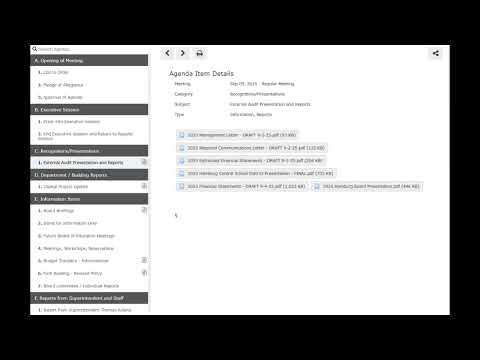
Board accepts clean audit; auditor flags GASB 101 adjustment and food‑service fund balance
Summary
The Hamburg Central School District board accepted the auditor’s unmodified opinion for 2024–25. The auditor told trustees a GASB 101 change raised compensated‑absence liabilities by about $1.6 million and urged continued monitoring of food‑service fund balance that rose during COVID funding years.
The Hamburg Central School District Board of Education voted to accept the district’s audited financial statements for the 2024–25 school year after an external auditor delivered a routine report and recommendation.
Pumpsy McCormick, the external auditor, told the board the firm will issue an unmodified — or “clean” — opinion on the district’s financial statements and reported no matters under government auditing standards. “We’re issuing an unmodified opinion, which is a clean opinion, that your financial statements are fairly presented in accordance with generally accepted accounting principles,” McCormick said.
The auditor said federal grant revenue declined to about $1,900,000 this year from roughly $2,800,000 the prior year as FEMA and COVID‑related funds expired. McCormick also noted that the district’s special‑education program accounted for 46% of federal funding tested and that no findings or questioned costs resulted from the testing. The auditor described the extra‑classroom activity funds (student club accounts) as carrying roughly $600,000 in receipts and disbursements and found no concerns in that area.
On accounting changes, McCormick highlighted the required implementation of GASB 101 (compensated absences). She said the change required a one‑time reclassification that increased beginning compensated absences by about $1.6 million — to approximately $5.8 million — because sick‑leave bank balances must now be included on the government‑wide statements.
The auditor reiterated management items from prior years: the food‑service fund has carried an elevated balance since the pandemic and the district submitted a state plan to reduce that balance through purchases and program costs. McCormick said the capital projects fund will show a large influx of revenue when outstanding bond anticipation notes (about $50 million) convert to bonds.
Trustees approved the auditor’s recommendation by voice vote. The board’s acceptance allows staff to file the required federal data collection form and close the audit process.
What happens next: the district will file federal reporting forms and continue to monitor reserves and the food‑service spending plan; trustees and administrators said they will track the implementation of GASB‑related disclosures in next year’s reporting.