Get Full Government Meeting Transcripts, Videos, & Alerts Forever!
Get email alerts on the Education topic
No spam. Unsubscribe anytime.
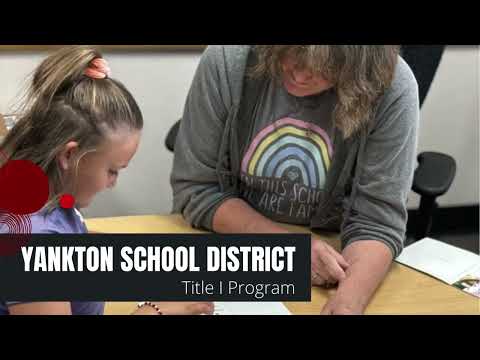
Yankton School District staff describe Title I K–5 reading and math supports to families
Summary
District curriculum and student services leaders and Title I teachers told families that Title I provides targeted K–5 interventions — warm-ups, small-group and multisensory activities, and immediate feedback — aimed at building students' accuracy, automaticity and confidence in reading and math.
Nicole Volness, the curriculum director for Yankton School District 63-3, and Jerome Plumish, the district’s director of student services, spoke to families about the district’s Title I program and how teachers support students in grades K–5.
Volness opened the presentation by introducing herself. "My name is Nicole Volness, and I'm the curriculum director for the school district," she said, and Plumish followed with his role and a brief statement about their shared leadership of the Title I work.
The presenters said Title I teachers provide targeted intervention support in reading and mathematics for kindergarten through fifth grade, focusing on frequent practice and small-group instruction. A Title I teacher described a typical lesson: "In a typical lesson, students begin with a quick warm up review. Then they transition to an activity where they practice as a small group or in partners. Often the activity is multisensory where students can manipulate words and numbers in order to make sense of the concepts in their mind." The teacher said lessons end with independent practice that includes immediate feedback and correction.
A Title I teacher told families that repeated practice and corrective feedback have produced observable gains in students' accuracy with letters and numbers. The teacher said that increased accuracy helps build automaticity and confidence, which in turn supports stronger reading and math skills.
Presenters did not announce formal actions or changes in policy during the recorded remarks; the transcript records an informational presentation about classroom practices and teacher-observed outcomes.